Costa Rica is a country that is home to both the Pacific and Caribbean coasts, each with its unique culture, attractions, and experiences. While both coastlines are equally stunning, they undoubtedly differ in their landscapes, wildlife, and overall vibe. Travelers often find themselves wondering which coast is better to visit. In this blog post, we will compare the Pacific Coast and the Caribbean Coast of Costa Rica and learn why the Pacific Coast is so famous among visitors. Also, we will see what popular activities travelers can enjoy on the Pacific Coast for a memorable and fun-filled vacation.
Pacific Coast vs. Caribbean Coast – Which is Travelers’ Favorite?
When choosing between the Pacific Coast and the Caribbean Coast of Costa Rica, travelers may find the Pacific Coast a more popular destination due to its accessibility, beautiful beaches, popular national parks, and better-developed infrastructure. The Pacific Coast offers more direct flights from major cities, making travel easier and more convenient. Its stunning, pristine summer beaches are ideal for swimming, sunbathing, and participating in water-based activities like surfing and snorkeling. Additionally, some of the most popular national parks in the country, such as Manuel Antonio National Park, Corcovado National Park, and Carara National Park – the one closest to Los Sueños Resort and Marina are located on the Pacific Coast, offering visitors incredible natural scenery and abundant wildlife. There are many more adventure activities to enjoy at Los Sueños Resort and Marian to add to your itinerary. You will never run out of options.
Finally, the Pacific Coast is more developed than the Caribbean, with more tourist amenities such as hotels, restaurants, and shops. While the Caribbean Coast has its own unique attractions and experiences, including a distinct Afro-Caribbean culture and a variety of national parks and reserves, the Pacific Coast may be a more popular choice for travelers looking for a more accessible, developed, and beach-oriented destination for a family vacation in Costa Rica.
10 Interesting Things to Do on the Pacific Coast of Costa Rica
The Pacific Coast of Costa Rica is a popular destination for travelers seeking stunning beaches, lush rainforests, and abundant wildlife. With a wide range of outdoor activities and natural attractions, the Pacific Coast offers something for everyone, from adventure seekers to those looking for a relaxing getaway.
So, let’s discover the vibrant side of Costa Rica on the Pacific Coast with these ten exciting activities that will help you make the most of your visit and create unforgettable memories.
Surfing
Surfing on the Pacific Coast is widely popular, with consistent swells and warm water year-round, making it one of the best surf destinations globally. Some top spots for surfing in Costa Rica include Jacó, Playa Hermosa, Tamarindo, and Santa Teresa, with breaks suitable for all skill levels. Surf camps and schools are available for beginners and pros looking to improve their skills or try surfing for the first time.
Snorkeling
The Pacific Coast of Costa Rica is a great place for snorkeling, with warm and clear waters and diverse marine life. Isla del Caño, Marino Ballena National Park, and Tortuga Island are among the best snorkeling spots, offering a chance to see dolphins, sharks, humpback whales, colorful fish, octopuses, and sea turtles. The best time to go snorkeling is during the dry season from December to April when the waters are calmer and provide better visibility.
Sport Fishing
Sportfishing is a popular activity on the Pacific Coast of the country due to its abundant marine life and variety of fish species. The region is mainly known for its exceptional game fishing. Quepos, Tamarindo, and the Gulf of Papagayo are the best fishing spots in Costa Rica to catch prized species such as marlin sailfish, dorado, and tuna. The best time for sportfishing in Costa Rica is during the high season, from December to April, although some species can be caught during the green season, from May to November. Fishing charters and tour operators are available for both experienced and novice anglers.
Hiking
Hiking is a great way to explore the natural beauty of the country’s Pacific Coast. Manuel Antonio National Park, Corcovado National Park, Monteverde Cloud Forest Reserve, and Arenal Volcano National Park are some of the best spots for hiking in Costa Rica. The trails offer spectacular views of the Pacific Ocean, wildlife sightings, and a chance to experience the region’s natural wonders. The Pacific Coast has hiking trails suitable for all experience levels, from beginner to advanced. If you are a beginner and need guidance, this guide with everything essential for safe and enjoyable hiking will be helpful.
Zip-lining
Zip-lining in Costa Rica on the Pacific Coast is a thrilling experience that lets you soar through the rainforest canopy while enjoying the breathtaking views. The region has some of the best zip-lining spots in the world, including Monteverde Cloud Forest Reserve, Manuel Antonio, and Jacó. Zip-line tours usually consist of a series of platforms, zip-lines, and suspension bridges that allow you to explore the rainforest uniquely. With zip-line tours suitable for all ages and skill levels, it’s an excellent adventure activity in Costa Rica for families and adventure-seekers to add in the travel itinerary.
Wildlife Watching
The Pacific Coast of this Central American gem is a paradise for wildlife enthusiasts, with its rich biodiversity and numerous national parks and reserves. Some of the best spots for wildlife watching in Costa Rica on the Pacific side include Manuel Antonio National Park, Corcovado National Park, and Marino Ballena National Park. These areas are home to various animals, including monkeys, sloths, toucans, and whales. Wildlife-watching tours are also available, offering expert guides to lead you through the parks and help you spot the country’s exotic wildlife.
Beach Hopping
Beach hopping is one of the most popular activities on the Pacific Coast, with hundreds of miles of stunning coastline to explore and witness the true natural beauty. The Pacific Coast has something for everyone, from secluded coves to bustling beaches. Some of the best summer beaches in Costa Rica include the Nicoya Peninsula, Manuel Antonio, and the Golfo Dulce. The best time for beach hopping on the Pacific Coast is during the dry season from December to April when the weather is sunny, and the water is warm. During this time, the beaches are less crowded, and the surf is generally calm, making it perfect for swimming and beach activities.
ATV Adventures
The Pacific Coast is a prime location for ATV adventures in Costa Rica with its rugged terrain and stunning scenery. Various spots along the coast offer ATV rentals and guided tours for an exhilarating experience. Some of the best sites for ATV adventures include Jacó, Manuel Antonio, and Tamarindo, each offering a unique terrain to explore.
Volcano Explorations
While the Pacific Coast is famous for its beaches and water activities, it also offers exciting opportunities for volcano exploration. The area is home to several active and dormant volcanoes. You can hike the various trails around the volcanoes, observe the stunning lava flows, and soak in the natural hot springs. Some of the best spots for volcano explorations in Costa Rica include the Arenal Volcano National Park and the Rincon de la Vieja National Park.
Cultural Tours
The Pacific Coast is rich in cultural heritage, and embarking on a cultural tour is a great way to explore this region’s history and traditions. From pre-Columbian artifacts to colonial architecture, cultural tours in Costa Rica offer visitors a glimpse into its culture and heritage. The best Cultural spots on the Pacific coast include Nicoya Peninsula, Montezuma, and Santa Teresa.
Conclusion
With its breathtaking landscapes, rich culture, and warm hospitality, the Pacific Coast is a must-visit for anyone seeking an unforgettable travel experience. This side of the country is a paradise for nature lovers and adventure seekers, offering a wealth of experiences that will leave a lasting impression. From soaking up the sun on pristine beaches to exploring the rainforest on an ATV tour, there is no shortage of things to do and see. Whether you’re staying at the luxurious Villa Firenze or another accommodation, be sure to include these 10 interesting activities in your itinerary to fully immerse yourself in the beauty and excitement of this spectacular destination.
Costa Rica has emerged as a leading promoter of wellness in recent years, with a growing number of wellness retreats across the country. These Costa Rica wellness retreats offer a unique opportunity for individuals to disconnect from the hustle and bustle of daily life and focus on their physical, mental, and spiritual well-being. In addition to its natural beauty, Costa Rica is known for its commitment to sustainable living and organic farming, with many wellness retreats sourcing their ingredients locally. With its tranquil surroundings, sustainability commitment, and wellness focus, Costa Rica is the perfect destination for those seeking a rejuvenating retreat.
One such retreat is located in the heart of the Costa Rican rainforest, surrounded by lush greenery and abundant wildlife. Guests can enjoy various activities, from yoga and meditation to hiking and game-fishing tours. Villa Firenze is a luxurious villa rental in Costa Rica with an idyllic setting for rest, relaxation, and rejuvenation. Here, guests can escape from the hustle and bustle of everyday life and indulge in wellness experiences designed to nourish the body, mind, and soul. From yoga and meditation to relaxing massages and freshly prepared gourmet cuisines, a wellness day at the villa is a truly immersive experience that leaves guests feeling refreshed and renewed.
In this blog post, we’ll take a closer look at what a typical wellness day at Villa Firenze looks like, so you can get a taste of the blissful indulgence that awaits you when you book Villa Firenze as an accommodation in Costa Rica.
The Benefits of Incorporating Wellness Practices into Your Vacation
People often go on vacations to break away from their everyday routine and relieve themselves from the pressures of daily life. However, many of us make the mistake of filling our vacation time with non-stop activities, overindulging in food and drink, and neglecting our physical and mental health and well-being, which can leave us exhausted, bloated, and even more stressed out than before. That’s where wellness comes in.
Wellness is about taking a holistic approach to health and happiness, focusing on physical fitness and mental and emotional well-being. Incorporating wellness practices into your vacation can help you return home feeling more relaxed, rejuvenated, and energized than ever before.
There are many benefits to prioritizing wellness during your vacation. For starters, taking care of your physical health can help you avoid illness and injury while you’re away, allowing you to make the most of your vacation time. It can also help you feel more confident and comfortable in your own skin, enhancing your experience and making your vacation more memorable.
Emotional and mental wellness are equally important. When we’re stressed out, anxious, or depressed, it can be difficult to immerse ourselves in the vacation experience fully. Incorporating mindfulness practices such as meditation or yoga can help us stay active and focused, allowing us to savor each moment of the trip to the fullest.
Finally, wellness practices such as healthy eating, yoga, and massages can help us establish healthy habits that we can carry with us long after the vacation.
What Does a Wellness Day at Villa Firenze Look Like?
Our all-inclusive villa in Costa Rica is the perfect accommodation option if you’re looking for a luxurious and relaxing getaway in Costa Rica. Imagine waking up to the sounds of the rainforest and starting your day with a yoga session in the stunning outdoors of the villa. Afterward, indulge in a healthy breakfast prepared by experienced and skilled chefs. Later on, unwind with a rejuvenating massage session, surrounded by the lush greenery of the rainforest. You can also take a dip in the villa’s private pool or enjoy a nature walk on the property. Whatever your wellness needs may be, the villa has got you covered.
The eco-luxury experiences at Villa Firenze blend well with the wellness practices and create a relaxing getaway atmosphere. Let’s see what a wellness day here looks like!
Let’s see what a wellness day at Villa Firenze looks like!
Escape to Nature and Relax with a Rejuvenating Massage at Serene Surroundings
Villa Firenze is a luxurious retreat that boasts stunning views of the natural beauty that surrounds it. Nestled amidst serene surroundings, our guests can immerse themselves in the breathtaking landscapes of Costa Rica. The lush gardens that envelop our villa offer a picturesque backdrop for those who wish to take a leisurely stroll or explore the local flora and fauna of Costa Rica. Our skilled masseurs provide customized massage sessions in such idyllic settings that cater to your specific needs. These sessions promote physical and mental wellness, relieve muscle tension and enhance relaxation. The gentle breeze and the melodious chirping of birds in the background provide a tranquil and serene ambiance that enhances the massage experience at the villa.
Your Massage, Your Way: Poolside, In-Room, or In the Club House
We understand the importance of natural surroundings for a truly relaxing massage session. That’s why we offer you the option to choose your preferred location for your massage session – whether by the pool, in your room, or in the clubhouse. Our team will work with you to create a soothing, rejuvenating, and relaxing atmosphere that allows you to recharge and unwind.
Each location is designed to help you make the most of our stunning natural surroundings. Enjoy the sound of the nearby rainforest and the gentle breeze as you receive your massage by the pool. Alternatively, choose to have your massage in our room or the clubhouse, with complete privacy and utmost comfort.
The suites and clubhouse are among the top 10 amenities to enjoy at Villa Firenze. No matter where you choose to have your massage, our team will ensure that the setting is perfect for you. We’ll provide ambient lighting, soothing music, and a comfortable massage table to ensure you feel comfortable throughout your session. Our skilled masseurs will work with you to customize your massage experience, ensuring that you receive the most beneficial treatment for your body, mind, and soul.
Meet Our Masseur with the Magical Touch
We believe a massage experience should be unforgettable. We know the significance of providing our guests with a calming massage session. Hence, we have appointed only skilled and professional masseurs who are experienced in their craft and only work with the best masseurs with a wealth of experience in providing different types of massages that are good for a tired body and tensed nerves. Our team of masseurs will help you achieve a state of pure bliss and relaxation, leaving you feeling rejuvenated and refreshed.
Our highly skilled masseurs understand the human body perfectly, ensuring they can provide a massage experience tailored to your specific needs and preferences. They will take the time to understand your concerns and focus on areas that require special attention, using their gentle and skillful gestures to help you release tension and achieve relaxation.
Invigorate Your Senses with Essential Oil-Infused Refreshing Towels
We ensure you have a satisfactory and beneficial massage experience during your wellness vacation in Costa Rica, so we offer essential oil-infused refreshing towels to complement your massage session. Essential oils are used in a massage session to enhance the relaxation experience and help you cool down and invigorate your senses.
Our refreshing towels are prepared with natural ingredients such as mint, eucalyptus, or lavender, which have therapeutic properties that help to soothe sore muscles and calm the mind. These essential oils are carefully chosen to provide a refreshing and invigorating experience, leaving you feeling rejuvenated and refreshed after the massage session.
The essential oil-infused towels also help remove excess oil from your skin, leaving you feeling clean and refreshed. The natural fragrance of the oils helps to uplift your mood and promote a sense of well-being.
Post-Massage Treat – Detox Smoothie
We try to promote health and wellness through various aspects of our services, and drinking a detox smoothie after a massage session is just one of them. Our smoothies are specially crafted to enhance your relaxation experience and provide essential nutrients for your body. They are made with fresh fruits, vegetables, and other natural ingredients rich in vitamins, minerals, and antioxidants. These smoothies help to replenish the body, promote detoxification, and hydrate the body, making them the perfect addition to your wellness day at Villa Firenze.
We take every aspect of our guest’s wellness seriously, including their dietary restrictions and meal plans. Our private chef is always available to cater to any specific needs, and we use locally-sourced ingredients to prepare every meal. This helps us to ensure our guests receive the freshest and healthiest meals possible, making their stay a truly rejuvenating experience.
Conclusion
Apart from being a leading promoter of health and well-being, Costa Rica is also one of the most luxurious vacation destination in the world. With its focus on promoting overall well-being, Costa Rica is the perfect destination for anyone looking to recharge their batteries and return home feeling rejuvenated and refreshed. A wellness vacation in Costa Rica is an investment in your physical and mental health that will leave you feeling revitalized long after your stay.
So, during your next trip to Costa Rica, book Villa Firenze, where we are committed to providing our guests with a unique and rejuvenating wellness experience. Our massage sessions, detox smoothies, and freshly prepared meals are just a few ways we promote wellness.
Villa Firenze includes a private chef, an experienced concierge, a RZR tour, and a sportfishing charter, all included with every booking.
The 50-ft infinity pool and private helipad are exclusively yours. No other guests and no shared access.
The X-Golf Simulator, clubhouse, and gaming room mean there is no such thing as a dull afternoon at the estate.
The villa’s Renaissance architecture and art collection make the estate itself an experience, not just a backdrop.
Three levels of security and SwissGuard monitoring quietly run in the background throughout every stay.
What separates a truly great private villa from one that just looks impressive in photos? The amenities, not as a checklist, but as a lived experience. When every detail has been thought through, you stop noticing what you need because it’s already there.
Villa Firenze, a 9,500 sq ft private estate at Los Sueños Resort & Marina on Costa Rica’s Pacific Coast, was designed precisely with that in mind. It sits at the heart of one of the world’s most celebrated luxury vacation destinations, with Costa Rica’s natural wonders as your backdrop, and the amenities inside are built to match that setting.
It’s also why the villa has quietly become a destination of choice for celebrities and high-profile guests who understand exactly what genuine privacy and world-class hospitality look like. If you’ve been wondering how this compares to an all-inclusive hotel, the answer becomes clear once you see what’s actually included.
1. 50-Foot Private Infinity Pool
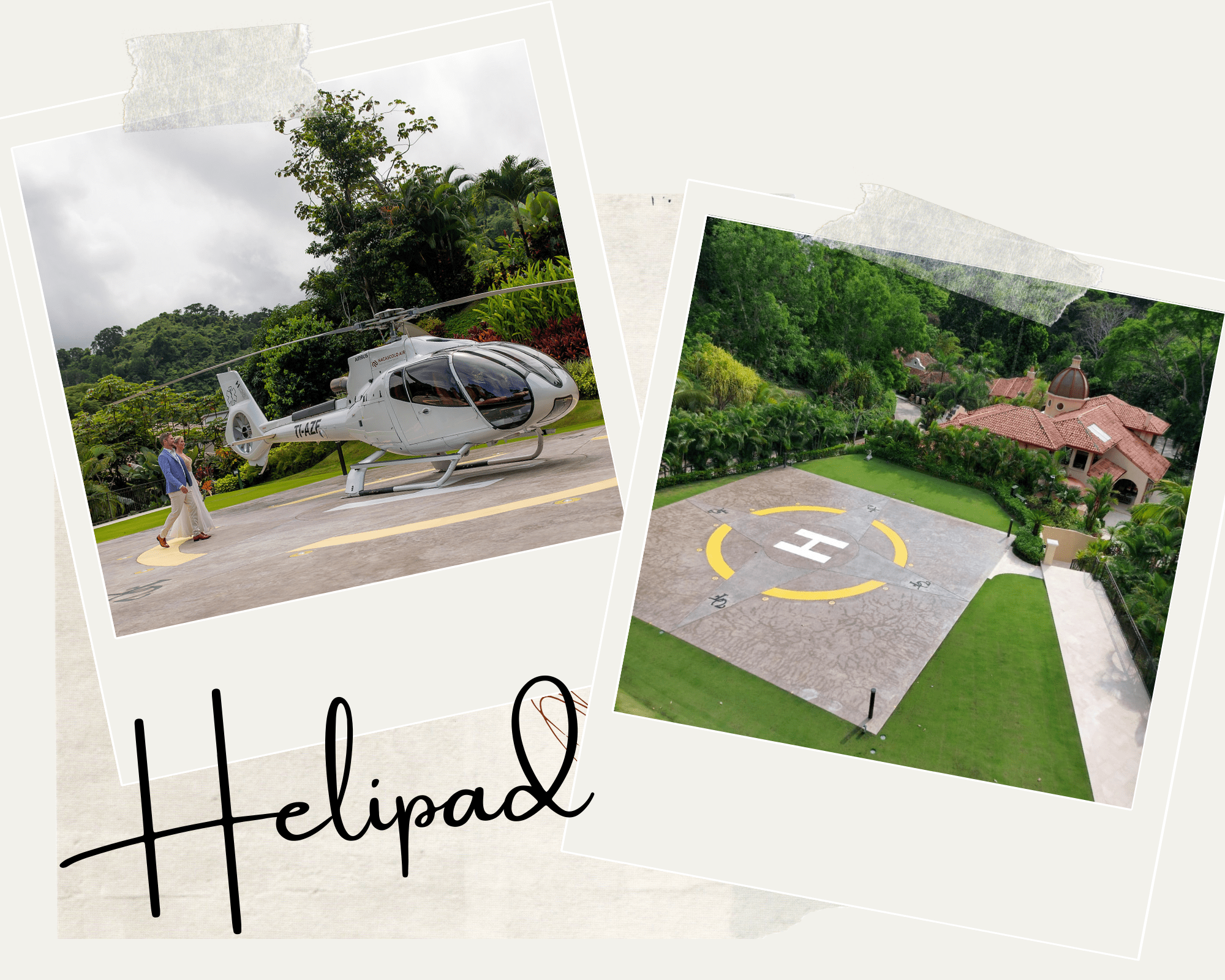
Villa Firenze is the only property in the Los Sueños neighbourhood with a private helipad, transforming your travel experience from the moment you arrive.
The concierge can arrange a direct helicopter transfer from San José’s Juan Santamaría International Airport straight to the estate. No road transfers, no public terminals, and no waiting. You land at the villa in style.
Beyond arrivals, the helipad opens up Costa Rica from above. Private heli-tours over Arenal Volcano, waterfalls, and national parks can be arranged for guests who want to cover the country’s highlights without spending hours on difficult roads.
It’s a completely different way to experience Costa Rica.
2. Private Helipad – the Only One in the Neighbourhood
Villa Firenze is the only property in the Los Sueños neighbourhood with a private helipad, transforming your travel experience from the moment you arrive.
The concierge can arrange a direct helicopter transfer from San José’s Juan Santamaría International Airport straight to the estate. No road transfers, no public terminals, and no waiting. You land at the villa in style.
Beyond arrivals, the helipad opens up Costa Rica from above. Private heli-tours over Arenal Volcano, waterfalls, and national parks can be arranged for guests who want to cover the country’s highlights without spending hours on difficult roads.
It’s a completely different way to experience Costa Rica.
3. Your Personal Private Chef
Having a private chef isn’t a novelty at Villa Firenze. It’s more about the standard of living. Chef Pablo Turel is part of the villa’s culinary team, and his approach is simple: he cooks what you want, the way you want it, using the freshest local ingredients Costa Rica has to offer.
Before your stay, you’ll discuss dietary preferences, favourite cuisines, and any restrictions. From that point, every meal, from breakfast to lunch and dinner, is prepared specifically for your group. Whether that means a relaxed poolside breakfast, a long family lunch in the courtyard, or a formal dinner for twelve on the terrace, the kitchen operates around your schedule, not the other way around.
Meals are complemented by the villa’s house wines, spirits, and a handcrafted cocktail list — all included.
4. Experienced Concierge Service
A concierge that’s available around the clock sounds like a luxury until you realise how much it changes the texture of a stay. Nothing is left unresolved. Nothing requires you to figure it out yourself.
Villa Firenze’s concierge team, led by Carolina Barrientos, handles everything from helicopter and ground transfers to sportfishing charters, private RZR tours, boat excursions, restaurant reservations, and bespoke picnics. They know the region, the operators, and exactly how to put together an itinerary that matches what you’re actually looking for, not a pre-packaged programme designed for someone else.
For guests planning events, weddings, or milestone celebrations, the concierge coordinates every vendor and logistical detail so the host can be a guest at their own event.
5. Clubhouse, X-Golf Simulator, and Entertainment Spaces
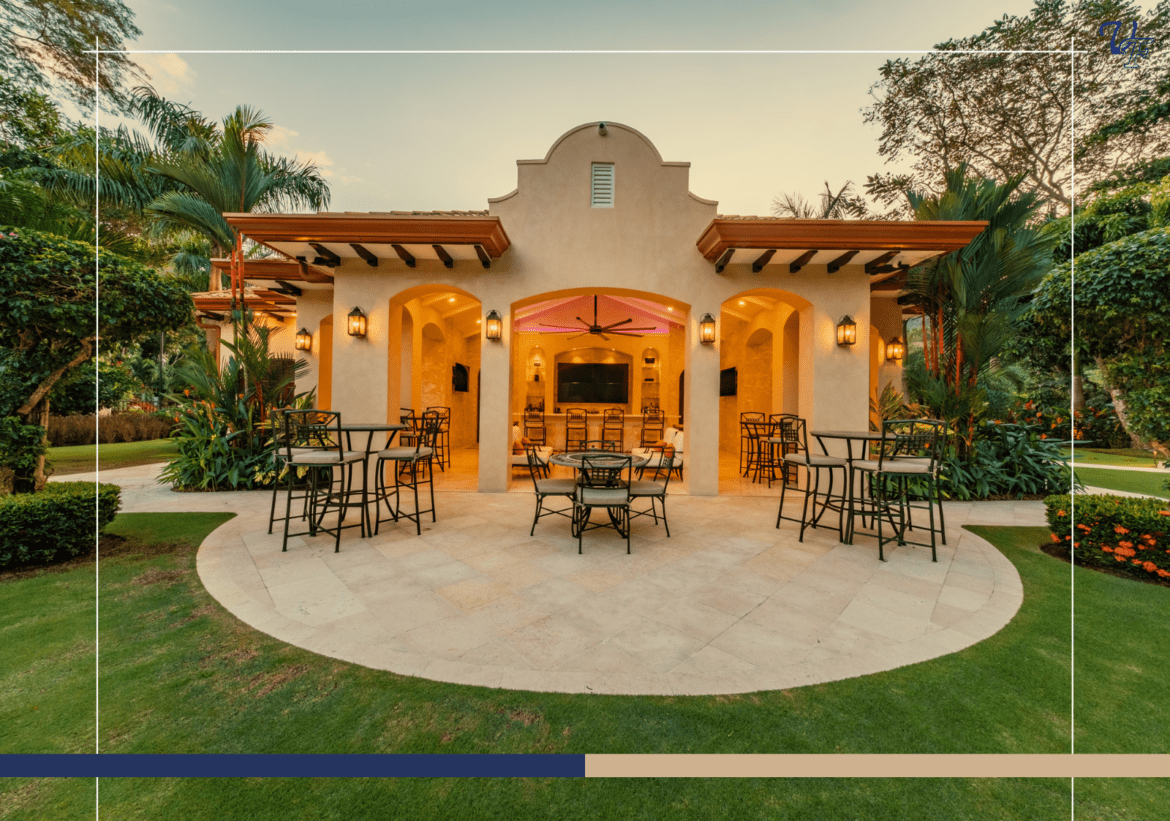
The clubhouse at Villa Firenze is where the estate’s social life happens. It’s a modern, fully equipped entertainment space, diversifying from an outdoor bar, comfortable lounge seating, state-of-the-art TVs to sound systems, and an ensuite bathroom that converts to an additional bedroom when needed.
The highlight for many guests is the X-Golf Indoor Simulator, a full golf simulation experience that lets you play famous courses from around the world without leaving the estate. For guests who play and for those who’ve never swung a club, it’s genuinely fun.
The gaming room adds another dimension: Xbox Rock Band, nine screens, and enough space for a group to get competitive. Rainy afternoons and late evenings have never been a problem at Villa Firenze.
6. Private RZR Tours — Included With Your Stay
One of the more unexpected amenities at Villa Firenze is the private, guided RZR tour that comes included with every booking. Two state-of-the-art Polaris RZRs take guests through river beds, past waterfalls, and up to scenic viewpoints across the mountain terrain surrounding Los Sueños.
A guide rides ahead throughout the tour, keeping the route safe and pointing out everything worth seeing along the way. For larger groups, additional RZRs can be arranged through the concierge.
It’s the kind of experience most guests didn’t know was on the itinerary until it became one of the trip’s highlights.
7. Sportfishing Charter — Also Included
Los Sueños Resort & Marina is one of Central America’s premier sportfishing destinations, known as the Billfish Capital of the World, and Villa Firenze guests have direct access to it. A private sportfishing charter is included with every booking.
Offshore, guests can target sailfish, marlin, yellowfin tuna, mahi-mahi, and wahoo. Inshore options include roosterfish and dorado. The concierge coordinates all arrangements, including vessel, guide, equipment, and timing, so the only thing guests need to bring is their enthusiasm.
8. Renaissance Architecture and World-Class Art Collection
Villa Firenze isn’t just luxurious in its amenities, but also extraordinary in its design. The villa draws direct inspiration from the Cathedral of Santa Maria del Fiore in Florence, and that influence is visible in every detail: the replica dome ceiling, Jerusalem limestone flooring, a grand central Italian courtyard, and antique art pieces sourced from around the world.
The collection includes an Andy Warhol Endangered Species print, Japanese swords, and bronze Costa Rican sculptures. Walking through the estate is a genuinely different experience from any other villa in the region. The architecture is part of the amenity. It creates an atmosphere that no amount of furniture or fittings can replicate.
It’s one of the reasons Villa Firenze has earned its reputation as a preferred hideaway for celebrities and discerning travelers who want an extraordinary setting without being loud about it.
9. Wellness — Pura Vida Living, Built Into the Stay
Costa Rica’s philosophy of Pura Vida living shapes every aspect of the villa’s wellness offering. It is a genuine commitment to a slower, more intentional pace of life.
Personal yoga sessions can be arranged in the villa’s tranquil gardens. The outdoor dining terrace, with its two-storey ceiling, expansive fan, and views over the infinity pool into the tropical gardens, is designed for unhurried mornings. Massage therapists and additional wellness services can be coordinated on request through the concierge. A wellness day at Villa Firenze is something unavoidable.
This commitment to sustainable luxury hospitality runs through every aspect of the villa’s operations. The beautiful blend of luxury and sustainability is reflected in solar-powered hot water systems and energy-conserving systems, as well as a deep respect for the surrounding ecosystem.
Luxury and responsibility aren’t in tension here. They’re the same thing.
10. Three-Level Security and 24/7 SwissGuard Monitoring
The final amenity on this list is one that rarely gets talked about but matters enormously: the security infrastructure at Villa Firenze is among the most comprehensive of any private villa rental in Costa Rica.
Three layers of access control protect the estate: the Los Sueños Resort & Marina community gate, the Eco Golf Estates gate, and a personal security code unique to each guest group. Beyond access control, the property is monitored 24/7 by a SwissGuard security system, with shatterproof windows and impenetrable metal gates throughout. A 24/7 power backup ensures uninterrupted operation.
For guests who travel with children, high-profile guests who require discretion, or anyone who simply wants to relax without worrying about what’s happening outside, this is the invisible amenity that makes everything else feel even better.
How Do These Amenities Come Together in a Real Stay?
Each amenity listed here is impressive on its own. But the real story is how they work together across a full stay. Want to understand the team and systems that keep everything running seamlessly? Behind the scenes at Villa Firenze gives you a closer look at exactly that.
For a broader picture of what’s possible beyond the villa gates, explore the curated off-property activities the concierge arranges, and see how all of this flows into a real day. See these amenities in action in a full breakdown of what a stay at Villa Firenze actually looks like.
The estate is available for private stays, destination weddings, family retreats, and corporate getaways. Availability is limited. Reach out early to secure your dates.
Costa Rica is home to over 26 national parks, private reserves, and wildlife refuges, offering travelers phenomenal opportunities to explore and enjoy stunning scenery, landscapes, and wildlife through hiking. From easy coastal walks to challenging mountain climbs, Costa Rica has hiking trails suitable for every level.
Many hikes here lead to natural attractions, such as waterfalls, national parks, beaches, volcanoes, and other stunning viewpoints, with beautiful and diverse natural surroundings that make the journey enjoyable. Costa Rica has hikes to suit all preferences – from a leisure stroll to a challenging trek.
10 Reasons Why Hiking is a Must-Do Activity in Costa Rica
There are several reasons why Costa Rica is considered one of the best places to enjoy hiking. Here are a few of them:
Stunning natural beauty: With its lush rainforests, pristine beaches, and majestic volcanoes, Costa Rica is home to some of the most breathtakingly beautiful scenery in the world. Hiking through these landscapes will surely be an unparalleled experience.
Rich biodiversity: Costa Rica is a biodiverse country with over 500,000 species of plants and animals. Hiking here means enjoying and exploring the diverse flora and fauna of Costa Rica, along with rare and exotic wildlife species like sloths, monkeys, toucans, and jaguars.
A range of difficulty levels: Whether an experienced hiker or just starting, there are trails in Costa Rica that suit everyone’s fitness level and abilities.
Protected national parks: Costa Rica is home to over 25 national parks and protected areas, preserving the country’s natural beauty and wildlife. Hiking in these parks is the best way to explore the pristine, untouched wilderness.
Expert local guides: Professional guides here are invaluable resources when it comes to hiking. They possess expert knowledge about the local flora, fauna, ecosystem, and environment. Not only do they ensure safety on challenging trails, but they also provide insights into the local culture and history.
Varied terrain: Costa Rica offers various terrains to explore, from tropical rainforests and cloud forests to mountains, volcanoes, and beaches. This diversity of landscapes means that every hike here is unique and offers a different experience.
Cultural experiences: Hiking here can also offer cultural experiences as many trails pass through rural communities where hikers can meet locals and learn about their way of life.
Adventure activities: Many hiking trails in Costa Rica offer several opportunities for adventure lovers, offering activities like ziplining, white-water rafting, and horseback riding.
Year-round hiking: Due to its location near the equator, Costa Rica offers year-round hiking opportunities. While the rainy season can make some trails more challenging, it also brings out the most beautiful side of the country.
Accessibility: Top hiking destinations here are easily accessible from major cities and tourist areas, offering opportunities to enjoy other activities, such as beach hopping or city sightseeing.
These factors contribute to the reputation of Costa Rica as a top hiking destination. For visitors looking for relaxation, adventure, or a unique vacation experience, hiking in Costa Rica is an activity that must be in their travel itinerary to Costa Rica.
10 Best Hiking Trails in Costa Rica
Here are 10 great hikes in Costa Rica to consider. These hikes offer unique experiences, from encountering rare wildlife to admiring breathtaking landscapes.
Manuel Antonio National Park
Corcovado National Park
Arenal Volcano National Park
Monteverde Cloud Forest Reserve
Rio Celeste Waterfall
Cahuita National Park
Cerro Chirripo
Rincón de la Vieja National Park
Tenorio Volcano National Park
Pacuare River Hike
Best Time for Hiking in Costa Rica
This Central American gem is one such vacation destination where every season feels like the best time to visit Costa Rica. But when it is specifically about planning a hiking trip, knowing the best season when the flora & fauna of the country are in their full charm comes in handy.
Though the dry season is the best time to enjoy the true beauty of Costa Rica, the time from December to April is also considered an ideal season for hiking the incredible trails of the country. During the dry season, the hiking trails are in the best condition, enabling hikers to enjoy the experience to the fullest. For those visiting during the rainy season, AKA the green season, the trails can be slippery & foggy, and cloudy weather can obstruct the stunning view of nature.
What to Pack for a Hiking Trip to Costa Rica?
Hiking is one of the most exciting and adventurous activities in Costa Rica. However, this popular destination for a family vacation in Central America is known for its not-so-certain weather conditions, which means sudden rains and cloudy weather can be troublesome for hikers if they have not appropriately packed.
Here, we have mentioned some essential things every hiker should carry while hiking to Costa Rica.
Clothes: There is no dress code to be followed, but carrying casual and comfortable clothes like shorts, tank tops, and quick-drying clothes is highly recommended.
Shoes: Comfortable flip-flops, hiking shoes, rain boots, sneakers, running shoes, and closed-toe shoes or sandals will make a perfect addition to a hiking trip.
Mosquito Repellent: Carrying mosquito repellent is highly recommended while visiting any national park or wildlife reserve for hiking.
Sunscreen: Costa Rican sunshine is what makes this country the prettiest. And in such weather, sunscreen cannot be missed. Carry sunscreen with a minimum of 30 SPF; remember to reapply every 5 to 6 hours.
Toiletries and Medications: Shampoo, conditioner, toothbrush, mouthwash, toothpaste, lotion, floss, and tampons are the essentials that should be packed. Remember to pack basic medicines for cough, cold, and flu.
Rain Jackets: Rain jackets are essential for hiking in Costa Rica during the rainy season. A good quality poncho will also work.
Insulated Water Bottle: Carrying a water bottle will reduce the use of plastic bottles, as Costa Rica is a follower of sustainable and regenerative tourism. Also, when carrying an insulated bottle, hikers can always have fresh water to drink during hot summer days.
Sunglasses and Hat: Carry at least two pairs of sunglasses and a hat to be safe from extreme sunny weather.
Backpack: For tours and sightseeing, carrying a waterproof bag of 30 L will make it easy to hold snacks, water bottles, a camera, towels, and other essentials.
Flashlights and Headlamps: They can be helpful while hiking during the rainy season. Also, walking and exploring the country at night can be risky and troublesome, but with flashlights and headlamps, it becomes easy to walk at night.
Documents: Documents like original passports, valid driver’s licenses, credit cards, and travel insurance should be packed and kept carefully.
Then there are other things that should not be a part of the travel kit, like –
Expensive jewelry items, clutches, and bags should be avoided, and instead, carry low-key items.
The roads and sidewalks of Costa Rica are uneven and full of potholes and cracks. So, it’s better to avoid carrying high heels and stilettos and stick to flats and sandals.
Bringing every debit card and credit card is optional as there are high chances of theft while hiking and visiting other tourist places.
Tips for a Hassle-free Hike in Costa Rica
While planning a hiking trip to Costa Rica, being well-prepared and aware of the potential challenges, rules, and other details becomes crucial. Here are some tips to consider for a hassle-free, memorable hike.
It is recommended to research the trails beforehand to ensure a safe and enjoyable hiking experience in Costa Rica.
Dress appropriately. Lightweight, breathable clothing and sturdy hiking shoes or boots with good traction are recommended.
Bring sufficient water and snacks to stay hydrated and nourished during the hike.
Hikers should protect themselves from the sun by wearing a hat, sunglasses, and sunscreen while hiking in Costa Rica.
Bring a waterproof bag or bag cover to protect electronics from rain and humidity.
Respect nature by not littering, staying on designated trails, and avoiding disturbing wildlife while hiking through natural parks and reserves.
Consider hiring a guide for unfamiliar, challenging trails. Guides will also help in learning more about the local ecology.
Before starting a hike in Costa Rica, knowing the park rules and regulations is essential.
Always consider guided hiking for a safe, hassle-free experience.
Conclusion
Costa Rica is a paradise for hikers and adventure seekers. This Central American country has everything in place – from lush green rainforests, stunning summer beaches, picturesque waterfalls, and majestic volcanoes. The country’s diverse terrain and rich biodiversity offer every hiker a unique, memorable experience.
However, before embarking on a hiking trip in Costa Rica, it is essential to research and plan carefully. Be prepared for the weather conditions, bring appropriate gear, rent a villa in Costa Rica, and know the local rules and regulations. With the proper preparation, hikers can have a memorable and safe hiking experience.
Frequently Asked Questions
Q. Is it safe to hike in Costa Rica?
Yes, it is generally safe to hike in Costa Rica. However, taking necessary precautions, such as researching the trail beforehand, is crucial. It’s also a good idea to hike with a partner or group and consider hiring a guide for unfamiliar hiking trails.
Q. Which is the best time of the year to visit Costa Rica for hiking?
The best time to visit Costa Rica for hiking is year-round due to its diverse geography, mild climate, and abundance of natural beauty.
Q. Which side is best for hiking in Costa Rica – the Pacific Coast or the Caribbean Coast?
The Pacific and Caribbean Coast of Costa Rica offers excellent hiking opportunities. However, the best side for hiking depends on personal preferences. The Pacific Coast has lush rainforests and stunning beaches with popular hiking trails in national parks like Manuel Antonio, Corcovado, and Rincon de la Vieja. The Caribbean Coast has beautiful waterfalls, dense jungles, and unique wildlife, with top hiking spots like Cahuita National Park and Gandoca-Manzanillo Wildlife Refuge.
Q. Which are the best hiking trails on the Pacific Coast of Costa Rica?
There are several great hiking trails on the Pacific Coast of Costa Rica. Here are some of the most popular ones:
Manuel Antonio National Park
Arenal Volcano National Park
Carara National Park
Corcovado National Park
Marino Ballena National Park
Rincon de la Vieja National Park
Santa Rosa National Park
Tenorio Volcano National Park
Montezuma Waterfall Hike
Nauyaca Waterfalls Hike
Q. What is the “Hike of Death” in Costa Rica?
Cerro de la Muerte is a mountain peak along the Talamanca Mountain range in Costa Rica. It is the highest point of the Inter-American Highway that stretches from Nicaragua to Panama. The mountain got its name, which translates to “Mountain of Death,” due to the challenging conditions that travelers faced in the past when traveling by foot. The cold temperatures and frequent landslides made the journey difficult, hence the nickname “Hike of Death.”
Q. What to pack for a hiking trip in Costa Rica during the rainy season?
The weather in Costa Rica can be unpredictable, so carrying these essentials while hiking during the rainy season is better.
Ponchos and rain jackets
Waterproof backpack
Sweaters
Quick drying clothes
Waterproof hiking shoes
Travel Umbrella
Q. What is the difference between guided vs. self-guided hikes in Costa Rica?
The main difference between a guided hike and a self-guided hike in Costa Rica is the presence of a guide. A guided hike is led by a knowledgeable guide who will lead the way, point out interesting flora and fauna, and share information about the ecosystem and wildlife. They can also ensure safety, particularly on more challenging hikes.
On the other hand, a self-guided hike is one where hikers explore the trail on their own, without a guide. While this gives them more freedom to go at their own pace and choose their own route, it also means they won’t get any expertise and guidance from experienced guides.
In Costa Rica, some hikes may require a guide for safety reasons or to help preserve the natural environment. In other cases, hiring a guide is recommended but optional. Ultimately, deciding to go on a guided or self-guided hike depends on the hikers’ preferences, experience, and comfort.
Los Sueños is a coastal resort and golf course located near Jacó in the Central Pacific region of Costa Rica, close to Herradura. This beautiful destination is nestled between a tropical rainforest spanning 1,100 acres and the inviting waters of the Pacific Coast. Its stunning ocean views, luxurious hotels, and picturesque golf courses have become popular vacation spots for those seeking a lavish getaway for a family vacation in Costa Rica.
Los Sueños has also established itself as a prominent hub for sportfishing in Central America, providing access to some of the best deep-sea fishing opportunities in the region. This vibrant community offers a range of amenities, including a village mall, cafes, and restaurants, making vacationing a breeze. In addition to tourism, Los Sueños has attracted affluent long-term residents, with world-class yachts and charters offering once-in-a-lifetime travel experiences out at sea. Every year, globally renowned fishing tournaments in Costa Rica are held here, attracting visitors from all over the world.
Being located near the airport and easily accessible to vacationers are some prominent reasons why Los Sueños continues to flourish.
When you choose to stay at any luxury villa rental in Costa Rica near Los Sueños, be prepared to be showered with endless exciting activities. While you can certainly partake in some activities on your own, such as hiking or golfing, the most exhilarating experiences will require an itinerary. We have curated an itinerary with the top ten activities, sports, and destinations in Los Sueños. The list includes an array of thrilling and enjoyable experiences, including crocodile tours, mangrove tours, food trails, and sportfishing charters.
These suggestions make up the top 10 things to do in Los Sueños Resort and Marina, ensuring there is something for everyone to enjoy along the stunning Costa Rican coastline. Whether you prefer a relaxing trip or an action-packed adventure, Los Sueños has it all.
1. Private Tortuga Island Picnic:
Tortuga Island should definitely be on your list if you are looking for an adventure-filled day trip while vacationing at the Los Sueños Resorts. This island is known for its picturesque white sands and crystal-clear waters, perfect for snorkeling or fishing. During the journey, keep your eyes peeled for sightings of majestic dolphins, sailfish, and even whales. To make your experience even more enjoyable, the Villa Firenze staff will help you plan and organize a private beach picnic at this summer beach in Costa Rica, complete with the best cocktails and scrumptious to-go food prepared by your own private chef.
2. Private Sportfishing Charter:
Los Sueños, titled “Billfish Capital of the World,” is heaven for fishing enthusiasts. For those seeking a family-friendly adventure, Los Sueños is the ideal gateway to incredible fishing opportunities all year round. If you prefer to stay closer to the shore, inshore fishing is just as exciting, with 50lbs+ roosterfish and 40lb+ dorado being common. Offshore fishing enthusiasts can target various species, including Sailfish, Marlin, Yellow-Fin Tuna, Mahi Mahi, Wahoo, and other game fish in Costa Rica. At Villa Firenze, we understand that fishing is a must-do adventure in Los Sueños, so we provide a fishing charter with the package. You can enjoy a guided fishing tour where you can create unforgettable memories with your friends and family. So, grab your fishing gear and head to Los Sueños to experience the thrill of sport fishing in Costa Rica. Enjoy the added convenience and expertise of Villa Firenze’s fishing charter.
3. Spa and Wellness Retreats/Yoga Sessions:
Villa Firenze is the perfect destination for a tranquil escape amidst the vibrant and lush Los Sueños. This serene retreat offers a range of wellness treatments to help you naturally achieve balance and wellness. In line with their dedication to sustainability and eco-tourism in Costa Rica, Villa Firenze also offers personal yoga sessions perfect for deepening your practice and finding inner peace during your stay. The private sessions take place in the tranquil gardens of the villa, allowing you to fully immerse yourself in the serenity of the surroundings and reap the benefits of a personalized yoga experience.
4. Enjoy Authentic Costa Rican Cuisine:
The Los Sueños Marina Village is home to various restaurants that offer delicious meals for the whole family. ‘Dolce Vita’ serves breakfast, lunch, and dinner, while ‘THE HOOK UP’ restaurant and sports bar feature a giant video screen and a souvenir shop. Meanwhile, ‘DOLCE VITA Coffee & Sweets’ offers homemade pastries, bread, and smoothies. You can also choose from the Asian-inspired dishes of ‘BAMBU Sushi & Asian,’ the wood-fired grill and pizza of ‘LANTERNA Italian Steakhouse and Garden,’ or the ‘Al Fresco’ restaurant at the Beach Club. If you want to enjoy your meals with your loved ones in private, surrounded by nature, stay at the villa and ask the chef to serve you your favorite Costa Rican cuisine.
5. Crocodile Tour:
A tour of the Tarcoles River is a thrilling adventure in Los Sueños, where visitors can see crocodiles, exotic wildlife species like iguanas, and famous tropical birds up close in their natural habitat. With the largest population of crocs in the country, the tour provides a fun and educational experience for the whole family. The jungle safari takes about two hours and will leave a long-lasting impression on the children.
6. Los Sueños Adventure Park:
Los Sueños Adventure Park offers a unique way to explore the stunning rainforest, i.e., on horseback. You can enjoy a guided tour to discover private waterfalls and natural swimming pools while spotting the region’s magnificent birds, such as toucans and scarlet macaws. As you meander through the lush terrain, playful white-faced monkeys will be there to cheer you up. It is an unforgettable adventure that brings you closer to the wonders of nature, while exploring the incredible flora and fauna of Costa Rica.
7. Beach Hopping:
Los Sueños boasts stunning beaches on the Pacific Coast that can be explored on a rented motorbike from the beach town of Jacó. Playa Herradura is next to the marina and offers an extensive sandy beach for walks, while Jacó beach town makes for a perfect spot to enjoy breathtaking sunsets. South of Jacó beach is the surfers’ paradise, Playa Hermosa, worth exploring despite not being ideal for swimming. If you head north from Los Sueños, you will come across Playa Mantas, offering calm waters and fewer crowds. With plenty more beaches in the region, beach hopping is a fantastic and must-enjoy adventure in Los Sueños.
If you are interested in knowing more about what is nearby this amazing coast, having insights about the best things to do on the Pacific Coast will be a great idea to begin with.
8. Mangrove Tours:
Explore the beauty of nature on a tranquil boat ride through the mangroves in Los Sueños. This adventure offers an opportunity to witness hundreds of bird species and other exotic wildlife species. As important ecosystems, mangroves provide essential functions, including fresh water supply and sediment filtration. It is an excellent adventure for birdwatching enthusiasts and families looking for a fun and educational tour in Costa Rica.
9. Horseback Riding and Waterfall Tours:
Discover the hidden gems of Los Sueños with a horseback riding and waterfall tour. It is the perfect adventure for families and nature lovers alike. Traverse through farms and rainforests where you can spot exotic wildlife such as monkeys, toucans, sloths, and macaws. Your knowledgeable guides will lead you to a refreshing waterfall where you can dip in the swimming pools and relax amidst the tranquil surroundings.
10. Manuel Antonio National Park:
Manuel Antonio National Park is a must-visit destination for adventurers in Los Sueños. As the most famous national park in Costa Rica, it offers an exceptional experience of unspoiled beaches, breathtaking nature, and a vibrant, laid-back ambiance. There are a variety of activities to indulge in, including snorkeling, kayaking, hiking, parasailing, and mountain biking, making it a perfect adventure spot for everyone.
Conclusion
Check out our complete Los Sueños Resort and Marina guide for a detailed overview on how your vacation will look like in this beautiful destination. Located in Herradura, Los Sueños offers a range of activities suitable for all ages, and Villa Firenze is the perfect base for exploring some of the country’s best attractions. Whether you want to unwind surrounded by nature or seek adrenaline-pumping adventures in Costa Rica, our package has something for everyone.
With Villa Firenze, you can enjoy the ultimate adventure tour of Los Sueños while enjoying a relaxing vacation. Our exclusive package includes a fishing charter, a Heli tour, and a private chef to make your stay with us more enjoyable, comfortable, and relaxing. Our dedicated concierge/manager and team can also help make reservations for these activities, ensuring a hassle-free and memorable vacation experience.
Book your stay with Villa Firenze today and get ready to make unforgettable memories at this breathtaking destination.
A wedding in Costa Rica without any fun activities is like a pineapple without its juicy sweetness – it just won’t be as enjoyable, especially in Costa Rica, where many incredible things await exploring.
Not only is Costa Rica this tropical wonderland, the perfect destination for your dream wedding, but it’s also the ultimate playground for adventure-seekers and fun-loving couples alike.
When you invite your guests to your tropical wedding extravaganza, you want to ensure they’re dazzled by your love and entertained and engaged throughout the wedding. Hence, if you want your guests to feel immersed in the local culture, including exciting activities and events during your wedding weekend is a great idea.
But how do you pick wedding activities that appeal to guests of different ages, personalities, and preferences? How will you know your guests are enjoying themselves and not feeling forced to have fun?
Ultimately, you can focus on everything that makes Costa Rica an incredible wedding destination.
So, grab the sunscreen, flip-flops, and a healthy dose of humor, as we explore the top fun and exciting activities to jazz up your Costa Rican nuptials!
1. Welcome Party
A great way to kickstart your wedding week is to throw a welcome party for guests from distant places to join you in your celebration. Typically thrown the night before, you can organize this party before your rehearsal dinner for your guests to enjoy.
You don’t have to stress yourself out to select a theme for the party. Go for something light that is enjoyable for everyone. Make it a casual stop-by for drinks and light snacks because your guests want to avoid going into a formal experience.
2. Boat Excursions
Costa Rica is famous for its gorgeous beaches and turquoise water. Boat excursions of all types and sizes are an excellent way to experience the area. You can choose a sunset tour for your guests. Adventure lovers can go deep-sea fishing. If you have a large group, a whale-watching tour is also an excellent way to give your guests a chance to experience Costa Rican vibe.
If you are staying in a luxurious wedding venue in Costa Rica, you can ask the personal concierge to make the required arrangements for these tours.
3. Ziplining
Ziplining is an exciting group activity that everyone enjoys and is suitable for all ages. And what better place to enjoy this activity than in the exotic lush rainforests of Costa Rica?
Though this activity is fun, if you have people with a fear of heights in your group, fear not, as you can choose a zipline with a cable at less height and relatively closer to the ground. However, if your group is full of adventurous people, you can go for higher cables and faster zip lines where you can soar like a bird high above the ground.
4. Catamaran Tour
Another activity you can arrange for your loved ones is a catamaran tour. Enjoy exquisite Costa Rican cuisine and drinks with your guests on a catamaran tour. You can spot some marine animals like dolphins, whales, and turtles. Costa Rica’s water is generally smooth; thus, there are fewer chances that your guests will suffer from seasickness.
Many catamarans will stop in a good snorkeling spot. Some also have giant waterslides that guests can enjoy. Ensure you pick a tour in the afternoon, so your guests can enjoy a spectacular sunset cruise.
5. Hiking
Costa Rica is home to some of the most biodiverse forests in the world. A guided hike through the rainforest is a great way to learn about the local flora and fauna while enjoying the stunning scenery.
6. Sportfishing Charter
If you’re looking for another exciting and memorable activity to add to your Costa Rica vacation, look no further than sports fishing. With its crystal-clear waters and abundant marine life, Costa Rica is a premier destination for sports fishing enthusiasts worldwide. And with our sports fishing charter, you can experience the thrill of reeling in some of the world’s most prized game fish.
In addition to the thrill of the catch, sports fishing in Costa Rica offers an opportunity to soak in the country’s stunning natural beauty from a unique perspective. From the vibrant colors of the ocean to the lush greenery of the coastline, the scenery alone is worth the trip.
Make Your Wedding Special with Exciting Activities at Villa Firenze
Take your wedding vows against a backdrop of colorful flowers, lush flora and fauna, and a stretch of golden sand overlooking the Pacific Ocean. Experience a romantic wedding at Villa Firenze that blends luxurious amenities with the warm traditions of Costa Rican culture.
At Villa Firenze, we pride ourselves on providing guests with an unforgettable experience. Elevate the excitement of your guests with adventurous activities perfectly arranged by a personal concierge available at the villa. To provide optimum convenience, we have a dedicated personal concierge who helps guests plan adventurous activities during their stay.
Whether ziplining through the rainforest, surfing the waves, exploring the local waterfalls, or horseback riding, our concierge can make all the necessary arrangements. Our experienced guides ensure guests have a safe and enjoyable time while experiencing the best of Costa Rica’s natural wonders. Always ensure to coordinate activities well in advance.
Our concierge takes care of every detail – from transportation to equipment rental so our guests can focus on an exhilarating adventure. We offer helicopter rides for a comfortable commute for your guests. With the help of our concierge, your guests will have the best time of their lives at our luxurious villa in Costa Rica.
Costa Rica offers one of the most diverse fishing environments in the world, with offshore, inshore, and freshwater species all accessible within the same trip.
The Pacific coast is the primary fishing hub, supporting iconic game fish like sailfish, marlin, mahi mahi, and roosterfish.
Inshore species such as roosterfish, snook, corvina, and cubera snapper are commonly found near rocky points, reefs, and river mouths.
The Caribbean coast is best known for tarpon fishing and is more specialized for visiting anglers than the Pacific coast.
Mahi mahi and corvina are among the most accessible species for beginners and mixed-experience groups.
Roosterfish, marlin, and cubera snapper are better suited for anglers seeking technical or physically demanding fights.
Freshwater fishing in Costa Rica, including rainbow bass and mountain trout, offers a quieter alternative to coastal trips.
Choosing which fish to target should guide decisions around seasonality, location, and trip length.
Staying near the Pacific coast provides the greatest flexibility to adapt fishing plans to weather, tides, and group preferences.
Costa Rica is one of the few destinations in the world where anglers can realistically target offshore game fish, inshore species, and freshwater fish within the same trip. Bordered by both the Pacific Ocean and the Caribbean Sea, and supported by a network of rivers, estuaries, and mountain lakes, the country offers an unusually diverse fishing environment for its size.
What makes fishing in Costa Rica especially appealing is not just the number of species, but how accessible many of them are. Anglers do not need extreme conditions, specialized expeditions, or narrow seasonal windows to encounter prized fish. From fast-moving pelagic species offshore to structure-oriented inshore fish and freshwater favorites inland, Costa Rica consistently delivers variety and opportunity.
This guide focuses on 10 of the most common and sought-after fish species anglers can catch in Costa Rica. The list includes a mix of iconic game fish, popular inshore species, and notable freshwater fish, each chosen because anglers actually encounter them while fishing here.
Top 10 Fish Species to Target in Costa Rica
Each species below explains where you’re likely to find it, why anglers target it, and what role it plays in Costa Rica’s sportfishing landscape. Whether you’re deciding what kind of fishing to prioritize or simply want to understand what’s in the water before you go, this list provides a clear, practical starting point.
Fish Species
Where You’ll Find It
Fishing Type
Why It’s Targeted
Best For
Sailfish
Offshore Pacific
Offshore game fish
Speed, acrobatics, high catch potential
First-time offshore anglers, sportfishing
Marlin
Offshore Pacific
Offshore game fish
Size, power, prestige
Experienced big-game anglers
Mahi Mahi (Dorado)
Offshore Pacific
Offshore / pelagic
Fast action, great eating
Beginners, families, mixed groups
Roosterfish
Nearshore Pacific
Inshore game fish
Power, difficulty, iconic status
Inshore specialists, technical anglers
Tarpon
Caribbean coast
Inshore / coastal
Explosive jumps, endurance fights
Advanced anglers, fly fishing
Snook
Estuaries & river mouths
Inshore
Precision, intelligence, challenge
Finesse anglers
Corvina (Sea Bass)
Nearshore Pacific
Inshore / food fish
Availability, mild flavor
Casual anglers, eating fish
Cubera Snapper
Rocky reefs (Pacific)
Inshore structure
Raw strength, hard fights
Experienced inshore anglers
Rainbow Bass (Guapote)
Rivers & lakes
Freshwater
Aggression, accessibility
Beginners, freshwater trips
Rainbow Trout
Mountain streams
Freshwater
Technical fishing, quiet settings
Fly anglers, experienced freshwater fishers
1. Sailfish
Sailfish are one of the most iconic game fish in Costa Rica and a major reason anglers travel here from around the world. Found primarily along the Pacific coast, sailfish are known for their speed, aerial displays, and aggressive strikes, making them one of the most exciting offshore species to target.
Costa Rica is widely regarded as one of the most reliable destinations globally for sailfish fishing. Seasonal migrations bring large numbers of sailfish close to productive fishing grounds, particularly during the dry season. This consistency allows anglers to plan trips with greater confidence than at many other destinations.
Sailfish are typically caught while trolling offshore and are almost always released as part of Costa Rica’s strong conservation culture. They are best suited for anglers interested in classic big-game sportfishing rather than harvesting fish for consumption.
Where you’ll find them: Offshore Pacific waters Why anglers target them: Speed, acrobatics, and high catch potential Best for: Sportfishing enthusiasts and first-time offshore anglers
2. Marlin
Marlin are among the most powerful game fish found in Costa Rican waters and represent the pinnacle of offshore sportfishing for many anglers. Both blue marlin and black marlin are encountered here, primarily along the Pacific coast, with seasonal opportunities that attract serious big-game enthusiasts.
What makes marlin fishing in Costa Rica especially appealing is the combination of deep offshore waters, productive currents, and healthy bait concentrations. These conditions allow anglers to target marlin without the extreme travel or narrow timing windows required in some other parts of the world.
Marlin are not targeted for numbers. They are pursued for the challenge. Long runs, deep dives, and sustained fights are common, and successful hookups often require experience, patience, and strong coordination with the crew. Like sailfish, marlin are typically released, reinforcing Costa Rica’s reputation as a conservation-minded sportfishing destination.
Where you’ll find them: Offshore Pacific waters Why anglers target them: Size, strength, and prestige Best for: Experienced anglers seeking true big-game challenges
3. Mahi Mahi (Dorado)
Mahi mahi, also known as dorado, are one of the most common and rewarding fish species anglers encounter in Costa Rica. They are fast-growing, aggressive feeders and are often found near floating debris, current lines, and offshore structures along the Pacific coast.
What makes mahi mahi especially popular is its versatility. They offer exciting action on light to medium tackle, are relatively accessible even for first-time offshore anglers, and are one of the best-tasting fish caught in Costa Rican waters. This combination makes them a favorite for mixed groups where some anglers prioritize sport while others value bringing fish back for the table.
Mahi mahi are present for much of the year, with peak abundance varying by region and ocean conditions. When conditions align, anglers may encounter multiple fish in a single day, making them one of the more consistent species to target on offshore trips.
Where you’ll find them: Offshore Pacific waters, often near a floating structure Why anglers target them: Fast action, accessibility, and excellent eating quality Best for: Beginners, families, and anglers who want both sport and food fish
4. Roosterfish
Roosterfish are the most iconic inshore game fish in Costa Rica and a top target for anglers who prefer fishing close to shore rather than heading offshore. Recognizable by their tall, comb-like dorsal fins, roosterfish are powerful, aggressive, and highly respected for the fight they deliver.
Unlike pelagic species, roosterfish patrol rocky points, reefs, beaches, and river mouths, often in shallow water. This nearshore behavior makes them uniquely accessible while still being technically challenging. They are not caught in large numbers, but each hookup is intense and memorable.
Roosterfish in Costa Rica are valued almost exclusively as a sport fish. Catch-and-release is the standard practice, and Costa Rica’s conservation culture has helped maintain strong populations along much of the Pacific coast.
Where you’ll find them: Nearshore Pacific waters around rocky structures Why anglers target them: Power, difficulty, and iconic status Best for: Inshore anglers and those seeking a technical challenge
5. Tarpon
Tarpon are one of the most spectacular game fish anglers can target in Costa Rica, known for their size, strength, and dramatic aerial jumps. While they are occasionally encountered on the Pacific side, tarpon fishing is most closely associated with Costa Rica’s Caribbean coast, where rivers, canals, and coastal waters provide ideal habitat.
Tarpon are often called the “silver king” for good reason. They strike aggressively, leap repeatedly once hooked, and can sustain long, exhausting fights. This makes them a favorite among anglers who enjoy technical fishing and testing endurance rather than chasing numbers.
In Costa Rica, tarpon are managed with conservation in mind. Catch-and-release is strongly encouraged, and experienced guides play a critical role in safely handling and releasing these powerful fish.
Where you’ll find them: Caribbean coast, river mouths, and coastal channels Why anglers target them: Explosive jumps and sustained fights Best for: Anglers seeking a physically demanding, high-skill challenge
6. Snook
Snook are a highly prized inshore and estuarine species in Costa Rica, valued for their intelligence, strength, and selective feeding behavior. They are commonly found around river mouths, mangroves, estuaries, and coastal structures, where freshwater meets saltwater.
What makes snook challenging is not size alone, but their awareness. They are known for carefully inspecting bait and for reacting quickly to pressure or unnatural presentations. This makes them especially appealing to anglers who enjoy technical fishing and precision rather than brute force.
In Costa Rica, snook are protected in many areas, and catch-and-release regulations are common. While they are considered excellent table fish in some regions, conservation practices are emphasized to protect local populations.
Where you’ll find them: River mouths, estuaries, and mangroves (Pacific & Caribbean) Why anglers target them: Intelligence, power, and technical challenge Best for: Inshore anglers who enjoy finesse fishing
7. Corvina (Sea Bass)
Corvina is one of the most commonly encountered coastal fish species in Costa Rica, particularly along the Pacific coast. Often referred to locally as “sea bass,” corvina inhabit sandy bottoms, river mouths, and nearshore waters where currents concentrate baitfish.
While corvina are not considered a premier sport fish, they play an important role in Costa Rica’s fishing landscape. They are frequently caught on inshore trips and are especially popular among anglers interested in food fish rather than pure sportfishing. Corvina is known for its mild, flaky meat and is commonly used in traditional dishes such as ceviche.
Because of their abundance and accessibility, corvina often appear in search queries related to fish identification and eating fish in Costa Rica.
Where you’ll find them: Nearshore Pacific waters, sandy bottoms, and river mouths Why anglers target them: Availability and good eating quality Best for: Casual anglers and food-focused fishing trips
8. Cubera Snapper
Cubera snapper are among the strongest inshore fish anglers can encounter in Costa Rican waters. Found around rocky reefs, ledges, and wrecks, these fish are known for explosive strikes and an immediate drive back toward structure.
What sets the cubera snapper apart is raw power. Once hooked, they test gear instantly, and landing one requires decisive pressure and experience. Because of their size and behavior, cubera snapper are respected targets for anglers who enjoy high-risk, high-reward fishing close to shore.
Cubera snapper are also a valued food fish, and conservation awareness is growing due to pressure on spawning populations in parts of their range.
Where you’ll find them: Rocky reefs and nearshore structure (primarily Pacific) Why anglers target them: Strength and challenging fights Best for: Experienced inshore anglers
9. Rainbow Bass (Guapote)
Rainbow bass, locally known as guapote, are the most popular freshwater sport fish in Costa Rica. Despite the name, they are not true bass but are members of the cichlid family. They are found in rivers, lakes, and reservoirs throughout the country.
Guapote are aggressive, territorial, and visually striking, with vivid coloration that makes them a favorite among visiting anglers. They readily strike lures and live bait, making them accessible even to beginners exploring freshwater fishing for the first time.
Rainbow bass fishing offers a different pace from coastal trips and is often combined with eco-tourism experiences inland.
Where you’ll find them: Rivers, lakes, and freshwater systems Why anglers target them: Aggression, accessibility, and visual appeal Best for: Beginners and freshwater fishing enthusiasts
10. Rainbow Trout
Rainbow trout represent a unique side of fishing in Costa Rica. Introduced to cooler, high-elevation regions in the mid-20th century, they now thrive in select mountainous areas where water temperatures remain low.
Trout fishing in Costa Rica is highly localized and seasonal, but it appeals to anglers seeking a quiet, technical experience away from the coast. These fish are typically smaller than their North American counterparts, but the setting and challenge offer a distinct contrast to tropical fishing.
Rainbow trout round out Costa Rica’s diverse fishing opportunities, highlighting just how varied the country’s waters truly are.
Where you’ll find them: Cold, high-altitude mountain streams Why anglers target them: Technical freshwater fishing in unique settings Best for: Fly anglers and experienced freshwater fishermen
Which Fish Should You Target on Your Trip?
The best fish to target in Costa Rica depends less on what’s “most famous” and more on how you want to fish, who you’re traveling with, and how much time you have on the water. This breakdown helps narrow priorities before you book charters or choose where to stay.
Offshore Anglers
If offshore fishing is your main goal, focus on sailfish, marlin, and mahi mahi. These species are typically targeted on full-day trips along the Pacific coast and offer classic big-game experiences.
Sailfish deliver fast action and consistent opportunities during peak season
Marlin are about size, endurance, and prestige rather than volume
Mahi mahi adds variety and is often the most accessible offshore option
Offshore fishing is best suited for anglers who want dedicated fishing days and are comfortable spending long hours on the water.
Inshore Anglers
Inshore fishing is ideal for anglers who prefer structure, technique, and shorter runs. Roosterfish, snook, cubera snapper, and corvina dominate this category.
Roosterfish offer the most iconic inshore challenge
Snook reward patience and precise presentations
Cubera snapper test strength and gear near structure
Corvina provides consistent action and food-focused opportunities
Inshore fishing works well for anglers who want flexibility and variety without committing to offshore distances.
Beginners
First-time anglers or those new to sportfishing should prioritize species that are accessible and forgiving.
Mahi mahi offshore
Corvina and rainbow bass inshore or freshwater
Guided inshore trips with live bait
These options offer a higher learning curve with fewer technical demands, especially when paired with experienced guides.
Families and Mixed Groups
For groups with different experience levels or non-fishing companions, variety matters more than specialization.
Mahi mahi and inshore species provide faster action
Shorter fishing days leave time for other activities
Freshwater trips can balance coastal fishing plans
This approach keeps fishing enjoyable without dominating the entire itinerary.
Planning a Fishing Trip Around Species
Once you know which fish you want to target, planning becomes significantly easier. Species choice influences seasonality, location, and where you should base your stay.
Seasonality (Quick Reality Check)
While Costa Rica offers year-round fishing, some species are more predictable at certain times of year.
Sailfish and marlin peak during the dry season on the Pacific
Inshore species like roosterfish and corvina are available most of the year
Freshwater fishing depends more on rainfall and river conditions
Rather than planning around a single “best month for fishing,” it’s smarter to align species goals with general seasonal conditions.
Location: Pacific vs Caribbean
Most visiting anglers focus on the Pacific coast, where offshore and inshore opportunities overlap. This makes it easier to switch between fishing styles during the same trip.
The Caribbean coast is more specialized, particularly for tarpon, and is best suited for anglers traveling with a single species in mind.
Why Staying Near the Pacific Matters
Basing yourself near the Pacific coast provides the greatest flexibility. Anglers can choose offshore or inshore trips depending on conditions, adjust schedules around tides, and avoid long transfers between fishing grounds.
A private villa such as Villa Firenze is well-suited to this kind of fishing-focused travel. Spacious accommodations make it easy to organize gear, flexible schedules allow for early departures, and a private setting helps balance fishing days with rest and downtime, especially for groups or families.
Experiencing any culture like a local is one of the best ways to capture a true sense of it, especially regarding costa rica food. Costa Rica is where delectable cuisine is a must-have for any vacation, whether you are visiting with family, friends, or your corporate friends. Costa Rica is not only known for its beaches, waterfalls, and volcanoes. But the warm and hospitable nature of Ticos (locals of Costa Rica) and the country’s bustling culture are also why this country holds a top position in the list of the best tourist spots worldwide.
Talking about Costa Rican culture, there is no way we miss mentioning the most delicious, varied, and nutritious cuisine. Because this Central American country is a part of the Pacific Ring Fire, it is easy to find tropical fruits and vegetables here, which are the staples of every traditional Costa Rican dish.
While enjoying a family vacation in Costa Rica, you can explore and taste a variety of cuisines, and their incredible flavors will surely leave a long-lasting impression on you. In addition to the traditional cuisine of Costa Rica, you will also get an opportunity to taste a wide variety of dishes from Japanese, Chinese, Italian, Peruvian, and Spanish cuisine.
If you also want to eat and enjoy like locals in Costa Rica, here is our guide to help you get started.
The Basic Elements of Costa Rican Cuisine
Fresh and organically grown fruits and vegetables hold a significant part in the Costa Rican diet. Like every other human being on the planet, locals here in Costa Rica consume three meals a day. Every meal is prepared from scratch, using fresh and organic ingredients. But the main elements of every dish served here are rice and beans. Besides them, Ticos also include potatoes in their meals for their starch-rich diet. As far as the type of meat eaten throughout the country is concerned, it varies according to the coast you are staying on. For example, you will get pork and beef with dishes made up of rice and beans on the Pacific coast. And, if you are on the Caribbean side, chicken and fish-based dishes are mostly served.
Plantain is one of the most-served fruits in Costa Rica. The plantain belongs to the banana family, and Ticos consume them in many different ways. The ripe plantains are sweet-flavored and can be enjoyed in soups, baked in honey, and deep-fried in oil. However, green plantains are also used in soups and in making patacones. You might also find the sliced, smashed, boiled, or fired green plantains served with guacamole or a bean dip in many restaurants or sodas in Costa Rica.
During your family vacation in Costa Rica, you will come across Salsa Lizano several times, as this is one of the country’s most commonly served traditional sauces. Salsa Lizano is a tangy-flavored sauce prepared using commonly available ingredients, like fresh and organic tropical vegetables and fruits like carrots, cauliflower, pepper, and cucumber. The unique flavors of Salsa Lizano make it one of the common and must-include elements of almost every dish served in Costa Rica.
Traditional Dishes of Costa Rica
There is not one traditional dish in Costa Rica; you will get a new one to enjoy during every meal. There are different traditional dishes for breakfast, lunch, and even dinner. Let us see what Ticos have to offer in terms of its delicious delicacies –
Gallo Pinto: Talking about the traditional dishes of Costa Rica, how can we miss the staples, i.e., rice and beans? Gallo Pinto is made of stir-fried rice and beans and served for breakfast with eggs, scrambled or fried, and cheese or sour cream.
Chorreadas: They are Costa Rican-styled tortillas served for breakfast in the country. You can enjoy them with sour cream, as freshly prepared sour cream will elevate its taste and flavor.
Casado: Casado is the traditional dish served for lunch in Costa Rica. In literal terms, Casado means “married man” in Spanish. This dish got its name from the belief that wives pack lunch for their husbands, with dishes mainly having rice and beans in a banana leaf. Similarly, Casado is prepared using rice and beans and served side by side with fish, chicken, pork, beef, or chop.
Bocan or Boquitas: Served as an appetizer here, Bocas is readily available around the country, in bars, restaurants, and even sodas, i.e., small eateries in Costa Rica. But the catch is this appetizer comes with a main dish, like patacones with gallos or Costa Rican tacos filled with beef, chicken, or vegetables.
Ceviche: It is also one of the most served and traditional dishes of Costa Rica, mainly made up of seafood like octopus, shrimp, and shellfish, along with raw fish. The unique and flavorful taste of the dish comes from the method used to prepare the seafood used in the recipe. Every seafood included in Ceviche is first soaked in lemon juice and then seasoned with onion, garlic, chillis, coriander, and cilantro for that distinct flavor.
Beverages Served in Costa Rica
Costa Rica is one of the largest exporters of coffee, but there are many more beverages that you can enjoy during your vacation in Costa Rica.
Agua Dulce: One of the most common local drinks served countrywide, especially in the chilled areas and highlands. Raw cane sugar is typically dissolved in hot water and used in its preparation.
Frescos: If you are craving something fresh, nutritious, and yet delicious, Frescos is what you should try. It is a fruity drink of fresh fruits, milk, or water. The main fruits used in the preparation are papaya, watermelon, mango, banana, blackberry, tamarind, strawberry, and guanabana.
Beer: As far as the most-served alcoholic drinks in Costa Rica are concerned, beers are the ones you will find across the country. Imperial and Pilsen are the popular beers you can enjoy here. Imperial has slightly lower alcohol content than Pilsen, so choose accordingly and enjoy it with your friends and family at any bar or restaurant. Apart from these common ones, you can also try Bavaria and Microbrew, slightly more expensive local beers, if you wish to try something different and unique.
Sweets and Desserts
Most Costa Rican sweets use milk, corn, sugarcane, eggs, and/or fruit in the preparation. Most desserts in the province of Limón use fried plantains and coconut as a base. Corn is typically the main component of desserts in the Guanacaste; however, milk, coconut, and fruit are the essential ingredients of the desserts served in the Puntarenas.
Tres leches: Tres leches are one of the most popular desserts in Costa Rica. It is a moist cake made primarily of milk and sugar. You can enjoy this delicious cake from any local restaurant or eatery during your vacation. The best time to enjoy this delicacy is either lunch or dinner.
Fruit Salad: Another popular dessert in Costa Rica, loved by locals and visitors both, is fruit salad. This dish often includes fresh watermelon, mango, papaya, pineapple, and banana, among other tropical Costa Rican fruits.
Queque Navideño: Also known as Christmas cake, Queque Navideño is a typical dessert served during the holiday season. With dried fruit as its main ingredient, this popular dessert resembles fruitcake in terms of look and taste. It is a sweet, heavy dessert typically baked after soaking in rum for a few days. Costa Ricans share this holiday cake with their friends and family as a token of their love and respect.
Arroz con Leche: Arroz con Leche is a beloved dish throughout Latin America and is often introduced to young children through the famous Spanish folk song “Arroz con Leche, me Quiero Casar.” This gluten-free culinary creation has become a cultural icon in Latin America. In Costa Rica, Arroz con Leche combines white rice, sweetened condensed milk, sugar, cinnamon, and vanilla to create a delicious dessert that can be served and enjoyed warm or cold.
Cajeta: Cajeta de coco is a classic dessert made with condensed milk, grated coconut, butter, sugar, and wafer crumbs. After cooking all the ingredients, they are formed into small balls and coated in either coconut or crumbs. These balls are typically placed in special paper cups and chilled before serving. Cajeta de coco can be enjoyed for breakfast or as a daytime snack, and pairing them with a hot cup of tea or coffee is recommended.
Why Are Costa Ricans So Healthy?
Costa Rica, located between Panama and Nicaragua in Central America, is proud of its culinary heritage. Contrary to popular belief, Ticos are much more active than people from other cultures, despite the country’s high consumption of saturated fats in its cuisine.
Knowing about the traditional, authentic cuisine is one of the essential things to know before moving to Costa Rica. Ticos never overindulge in food. One way they maintain such good health is by limiting their portions. And lunch is the most important meal of the day for them. In fact, like many Latin American countries, businesses and schools close for an hour during lunch to allow staff and students to return home and enjoy a leisurely meal with their families. The lifestyle that Ticos follows is entirely different from other cultures.
Rice and beans are common ingredients in Costa Rican cuisine. Salt, onions, and garlic are other common ingredients Ticos use in their daily meals. Meats are consumed in moderation, whereas beans have high nutrient content. You will rarely find dairy and cheese in traditional cuisine.
Fresh seafood is always available here because it borders water on both sides, with the Pacific to the west and the Caribbean to the east. The most popular meats are beef, pork, and chicken. In Costa Rica, you can expect dishes that include the stomach, brains, and other organs. Fresh vegetables, like tomatoes and beans, and fruits, like plantains, are other staples.
The Ticos can maintain their physical fitness because the salad portions are typically more prominent than the portions of beans and rice in their meals. During your vacation in Costa Rica, finding healthy costa rican food options from the cuisine is easy. You can enjoy the delicious fusion of culinary flavors by sticking to a healthy diet rich in fresh fruits and vegetables.
If you are still debating why Ticos are so healthy and active, you should check out Nicoya Peninsula – a Blue Zone in Costa Rica, and all your doubts will be clear.
How to Eat Like a Local in Costa Rica
Food is an integral part of the history of Costa Rica. Every family gathering, celebration, or event is often centered around having meals together, as people here prioritize having at least one meal of the day together. Eating together with no gadgets is one of the cultural traits of Costa Ricans passed from generation to generation, and everyone in every family values it.
Traditional cuisine from Costa Rica combines comfort food, grandma’s cooking, and an exquisite Latin flair. You don’t need to step out to enjoy this authenticity when staying at Villa Firenze, a prominent Costa Rica villa. The villa boasts a private chef who is an expert in Costa Rican and international cuisines. However, if you choose to explore outside, small, family-run restaurants, known as sodas, are the best places to relish staple dishes of this country on a budget.
Frequently Asked Questions
Q. What are the basic elements of the Costa Rican diet?
The Costa Rican diet primarily consists of rice and beans, typically included in almost every meal, including breakfast. Potatoes are another costa rican food, providing a starch-rich addition to the diet.
Q. Is Costa Rican food healthy?
Food in Costa Rica is generally healthy, containing fresh vegetables, fruits, lean proteins, and healthy carbohydrates. The traditional diet is varied and includes a range of nutritious, fresh, and locally sourced ingredients commonly picked straight from trees during farm visits. The Costa Rican diet can be a good option for those seeking a balanced and nutritious way of eating.
Q. What do Costa Ricans eat for breakfast?
A typical breakfast in Costa Rica is Gallo Pinto, a dish with leftover rice and beans mixed and served with various toppings. Gallo Pinto is sometimes paired with sausages or plantains as well for added flavors.
Q. What do Costa Ricans drink?
The national drinks of Costa Rica are coffee and Guaro, an alcoholic beverage.
Q. What fruits do Costa Ricans eat?
The abundance of fresh and flavorful fruits is a crucial feature of the Costa Rican diet. Costa Ricans eat various fruits, including tropical fruits like mangoes, pineapples, papayas, and bananas. They also enjoy watermelon, cantaloupe, strawberries, and popular fruits like guava and passionfruit.
Costa Rica protects 25% of its land. Villa Firenze sits inside that commitment, not outside it
Exclusive-use estate means one group at a time, a different hospitality model from traditional resorts
Private chef sources locally, menus built around guest preferences before arrival
Wildlife-safe grounds within Los Sueños, surrounded by intact Pacific Coast rainforest
Privacy, personalized service, and world-class amenities in close connection with Costa Rica’s natural surroundings
Luxury and sustainability are often presented as a trade-off. Villa Firenze was designed to challenge that assumption.
Set within the Eco Golf Estates of Los Sueños Resort and Marina in Puntarenas province, this fully private estate is where luxury meets sustainability without either term having to apologize for the other.
Costa Rica provides the backdrop. Roughly 25% of the country’s land is protected as national parks, wildlife reserves, and refuges. Costa Rica’s eco-tourism leadership is a legal and ecological reality, and Villa Firenze sits inside that commitment.
Turns out the rainforest and the infinity pool have always been able to coexist. Someone just had to build the right villa.
What Makes Villa Firenze an Eco-Luxury Villa?
Villa Firenze is a fully private, exclusive-use luxury estate on Costa Rica’s Central Pacific Coast.
One group at a time, a chef who cooks deliciously, and an estate that runs entirely around your stay rather than around a hotel operation. This reflects a more intentional approach to luxury hospitality, one that values privacy and a stronger connection to the surrounding environment.
Eco-luxury is a designed philosophy. Fewer guests per stay, lower operational waste, sourcing decisions that keep money local, and a setting built to coexist with nature rather than replace it.
Villa Firenze reflects many of the principles increasingly associated with modern eco-luxury travel.
Villa Firenze’s Connection to Costa Rica’s Natural Environment
The grounds of Villa Firenze sit surrounded by Costa Rica’s rich biodiversity: intact rainforest canopy, resident wildlife, and the particular quality of air that moves through a property when the trees around it are left standing.
Los Sueños was developed with conservation covenants built into the land title. Wildlife moves through the estate grounds. North-facing orientation and natural cross-ventilation reduce energy dependence throughout the day.
Outdoor living spaces, the terrace, the pool deck, and the courtyard, are designed to keep guests in the environment rather than sealed away from it.
Sustainable Practices at Villa Firenze
Good intentions are easy. What follows is what Villa Firenze actually does.
Local Sourcing
Fresh produce from nearby markets and coastal suppliers, not flown in
Menus adjusted daily around what the coast and farms offer that morning
Wine cellar and bar stocked with regional selections where available
Waste-Conscious Dining
Guest dietary preferences collected before arrival
Ingredients sourced to match the group size, not a buffet line
Low-Impact Exclusivity
One group on property at a time, no shared pool turnover or lobby traffic
No mass linen cycles for rotating guests
Golf carts used within the estate for ground movement
Private RZR tours guided through riverbeds, waterfalls, and viewpoints
Supporting the Local Economy
Local market tours arranged for guests on request
Villa team connects guests to local guides, operators, and experiences
Spend stays within the local economy, not absorbed by international chains
Nature-Connected Hospitality
Wildlife-safe grounds within the Los Sueños conservation covenant
Outdoor living spaces designed to keep guests in the environment, not sealed from it
Cultural immersion built into the stay, not offered as a paid add-on
For context on where Villa Firenze sits among top eco-friendly accommodations in Costa Rica, the distinction is in the operational model rather than the marketing language.
Can Luxury Travel Be More Environmentally Conscious?
Most eco stays ask guests to make a trade. Smaller rooms, simpler menus, fewer amenities. All in the name of a lighter footprint. Villa Firenze does not ask for that trade.
Villa Firenze demonstrates that luxury and environmental awareness do not have to exist at opposite ends of the travel experience.
The private chef, the 50-foot infinity pool, the Jacuzzi, the X-Golf simulator, the fire pit, and the wine cellar are all here. These amenities allow guests to enjoy a high level of comfort while remaining immersed in Costa Rica’s natural surroundings.
The morning smells like wet earth and coffee. The pool catches the light before anyone is in it. Somewhere in the canopy above, something is already awake and moving. What a day at Villa Firenze looks like is less a schedule and more a rhythm. The kind you did not know you needed until you are already in it.
The most significant decision you must make while planning your wedding is selecting a venue. Having a wedding that looks straight out of the movie is something that every couple wants. But it becomes a gigantic task with so many choices and suggestions from families and friends. However, Costa Rica is a perfect destination if you want to have a wedding in Central America.
Costa Rica has become a prevalent choice for destination weddings. From the beautiful and wild shores of the Pacific Ocean to the serene beaches of the Caribbean coast, Costa Rica is a perfect place to take wedding vows. Located in Central America, this country provides panoramic views and an assortment of gorgeous luxury villas, five-star resorts, boutique hotels, and eco-lodges.
The wedding venue you select will make the foundation of beautiful moments you will cherish for the rest of your life. So, if you are confused about choosing a resort, a hotel, or an exclusive luxury villa as your wedding venue in Costa Rica, fret not!
Regarding a hotel vs. vacation rental, the former looks better. But dig a little deeper, and you will realize that only vacation rentals can give you an authentic experience. While there are various good hotels and resorts in Costa Rica, nothing can beat the charm of marrying your partner in a beautiful, luxury villa in Costa Rica like Villa Firenze, with unique amenities to make your moments unforgettable.
About Villa Firenze
Still wondering why Villa Firenze is the best wedding venue in Costa Rica? Villa Firenze is an idyllic place and the best wedding venue in Costa Rica. Lush vegetation on the property inhabits the spaces most charmingly. The splendid outdoor space of this gorgeous villa interacts with nature. At the same time, the spacious indoors have four luxurious suites equipped with modern conveniences and an infinity pool to help you relax and rejuvenate in luxury. This larger-than-life villa maintains a tranquil vibe, slowly revealing its beauty.
Here are key reasons why you should choose a villa over a hotel or a resort:
1. An Exquisite Location for Your Special Day!
Every couple is unique, and hence their requirements vary. While hotels will appear more cost-effective initially, you will realize that private vacation rentals offer excellent value. Luxury villas come in a wide range of styles and sizes, which you can choose depending on the size of your guest list.
Villa Firenze is a modern architectural marvel with an old-world charm. Whether you seek a small intimate wedding or a large gathering, this property can accommodate your guests.
Villa Firenze is an exquisite property designed with a deliberate focus on the convenience of our guests. With four spacious, luxurious suites carefully designed for maximum comfort, the villa sprawls across 9,500 square feet of exotic rainforest. The villa’s architecture blends the distinct design elements with a thread of effortless elegance. Villa Firenze is the place where you will experience true grandeur!
2. Complete Privacy for Your Intimate Wedding
Your wedding is intimate, and your venue should offer exclusivity and complete privacy. Privacy is one of the primary reasons why most couples pick a luxury vacation rental over a hotel. A resort or a hotel does not offer complete privacy because of various areas accessible to the public. When you book a luxury villa, you get tons of privacy and seclusion as you have a whole property. You only share it with your family, friends, and loved ones. We also offer lavish amenities to entertain you and your guests.
From the special moments when you take vows to the intimate moments you share with your family, at Ville Firenze, we ensure that your wedding is an entirely personal affair, surrounded only by the people you choose.
3. A Personal Concierge to Take Care of Your Conventional & Special Requirements
Do all the wedding preparation and the thought of managing the guests appear overwhelming? From deciding on the menu to selecting the wedding theme, many couples need help to handle everything independently. But when you book a luxury villa in Costa Rica for your wedding, you get a personal concierge to take care of all your needs. Hotels can’t provide you with this personalized experience.
At Villa Firenze, you will get that celebrity vibe that makes the entire experience outstanding. A personal concierge will assist you with making reservations and private airport transfers to and from the airport, Heli tours, and a customized itinerary for your guests so that you can sit back and look forward to your wedding day stress-free.
Our staff will keep your guests actively engaged in every wedding ceremony. From the start of their vacation to the finish of your fete, we will take care of everything.
4. Dedicated Security
Security is paramount, whether a small gathering or a large one. A hotel will provide protection and cater to the other guests flooding the premises with their visits. Private rental property will provide 24/7 security dedicatedly so you can enjoy every moment of your special day without worrying about your privacy.
One of the key highlights that makes Villa Firenze the ultimate destination for unforgettable weddings is its high security. This luxury villa is under 24×7 surveillance by SwissGuard security to ensure the safety of our guests. The Eco Golf Estates and Los Sueños neighborhood has only single entry and exit points to ensure only guests can access the property.
5. Design Your Menu for the Best Culinary Experience
Good food plays a vital role in weddings. It keeps the nosey guests busy and ensures everyone enjoys the wedding. A resort will offer a vast menu, but it will be a pre-decided menu with a limited scope of customization. A luxury villa not only helps you design a delicious menu for your guests on your wedding day, but it also provides a world-class chef who will prepare gourmet breakfasts, lunches, and dinners for you and your guests.
Conclusion
The latter is always a winner in the hotel vs. vacation rental battle. And if you are looking for a grand and luxurious wedding, Villa Firenze is the best wedding venue in Costa Rica. Elegant, classy, and extravagant is what indeed describes this property. From selecting your wedding theme to decorations, designing an exclusive menu, to taking care of your guests with customized tours, every service at Villa Firenze is top-notch! So, what are you waiting for? Book Villa Firenze now to have a perfect destination wedding in Costa Rica.
Are you contemplating moving to Costa Rica? Let us help you decide. This Central American paradise has always been one of the best countries for ex-pats to live, study, and retire. Thanks to its surfable beaches, stunning natural surroundings, and incredible biodiversity, adventure enthusiasts also consider moving here. Overall, Costa Rica makes a perfect place to move to for a happy, healthy, and peaceful life.
If you plan to move to Costa Rica, you might need help understanding the country better. We have curated this ultimate guide to Costa Rica with essential things you should know before moving.
Life in Costa Rica
The World Economic Forum has listed Costa Rica among the happiest countries in the world. Families, retirees, and those pursuing education enjoy a high standard of living here, thanks to stunning beaches, scenic rainforests, a stable economy, and an educated populace. The Pura Vida way of living followed by the locals also contributes to the high quality of life for which Costa Rica is recognized worldwide.
Moreover, the beautiful landscape, laid-back lifestyle, warm tropical weather, vibrant fiesta season, and developed healthcare systems make this Central American country a highly sought-after place for ex-pats.
People of Costa Rica
Costa Rica has a diverse population due to the considerable number of residents from America and Europe living here. The native Costa Rican population makes up about 2.4% of the total. Together with the native Ticos, most ex-pats living here are retirees, primarily from North America and Canada. Also, as Costa Rica is home to some international schools where children can get quality education, most families choose to move here.
As we have already mentioned that the Costa Rican population is diverse, i.e., the population is comprised of eight different indigenous groups named –
Cabécares
Bribri
Ngäbe
Térrabas
Boruca
Huetares
Maleku
Chorotegas
Also, Costa Ricans constitute –
European – 45.6%
Amerindians – 33.5%
African – 11.7%
Asian – 9.2%
These are some of the interesting facts about Costa Rica. As far as the locals of Costa Rica are concerned, their nature is one of the driving factors why it is one of the most famous tourist destinations worldwide. Local Costa Ricans, AKA Ticos, are incredibly kind, supportive, and well-educated. They believe in the “work to live” over the “live to work.” If you ever meet a Tico, you will experience a laid-back vibe because they believe in enjoying nature, spending time with their friends and family, and focusing on leading a health- and goal-oriented lifestyle.
Safety in Costa Rica
Although Costa Rica is a safe country, due to criminality, the U.S. Department of State encourages you to proceed with greater caution. Some crucial safety measures include:
Being aware of your surroundings
Not showing off your money in public
Not putting up a fight when someone tries to rob you
The best way to handle thefts and other crimes in the country is to contact a nearby police station.
Education in Costa Rica
The schools and universities in Costa Rica are among the best in Latin America. Ex-pats moving here with children or planning to start a family will be impressed with the education system. You must choose between public, private, and international institutions to find the best school for your child. You can consider any of them if your children are fluent in Spanish. Otherwise, you can choose between private and international schools. Fortunately, the quality of education in all schools remains consistent. Some advantages of attending a private or international school are smaller class sizes, more extra-curricular activities, and flexibility if you have Costa Rican residency.
Schooling in Costa Rica
Unlike other popular vacation spots, Costa Rica is a luxury vacation destination in the world, having a top-notch educational system that attracts families from abroad. The country emphasizes education and human development and has some of the best schools in Latin America. In the Central Valley, particularly in San Jose, private and foreign schools are the most popular where children can get quality education.
Weather in Costa Rica
Every year, many visitors and immigrants rush to Costa Rica for a vacation because of the country’s warm, tropical weather. The dry and rainy seasons are the two major seasons here. The wettest months are typically from May to November, with the most precipitation occurring in September and October. The months from December to April are considered the driest months. The average yearly temperature in Costa Rica ranges from 70 to 81 degrees Fahrenheit, making it a comfortable place to have a home.
Long story short, every season is the best time to visit Costa Rica, and if you are planning to make Costa Rica your home away from home, you will love its tropical weather.
Healthcare in Costa Rica
The quality of Costa Rica’s medical staff and facilities will impress everyone planning to settle in the country. Costa Rica offers some of the best healthcare facilities in Latin America, claims International Living. The public and private healthcare systems are available to ex-pats in the nation. Top-notch healthcare services are affordable to those in the United States. Healthcare expenses range from “approximately a third to a fifth of what you’d pay in the U.S.”
Cost of Housing in Costa Rica
Even though home costs vary based on the city and town, Costa Rica’s housing market is quite reasonable. As per Global Property Guide, “The most expensive real estate in Costa Rica is said to be found “in the Central Valley, the wider urban areas including San Jose, Alajuela, Heredia, and Escazu, where most enterprises are, and the Pacific coast.”
Cost of Living in Costa Rica
The cost of living in Costa Rica is far less than in the United States. Compared to the United States, consumer, rent, restaurant, and food expenses are all significantly lower in Costa Rica. According to International Living, a well-known publication that lists the finest places in the world to live, retire, vacation, and invest, “ex-pats from the United States, Canada, and Europe spend less money in Costa Rica than they do in their own countries.” According to the magazine, “many elderly couples live well on $2,000 a month and much better on $2,500 to $3,000.” While “a single person can live on between $1,400 and $1,700 a month.”
Of course, different lifestyle choices will affect the cost of living differently. Although those who live in popular tourist areas might expect to pay extra, foreigners will discover that the country is quite reasonable. Costa Rica is also on the list of the best places to retire in the world. Moreover, you will find several practices followed for sustainable and regenerative tourism in Costa Rica to reduce carbon footprints.
Average Costs Breakdown (per month) (2022 Updated)
Lifestyles differ according to the clothing items purchased, modes of transportation used, and eating habits. When all the everyday expenses are considered, we can calculate how much money is required to live comfortably in Costa Rica. Here, we have presented a graphical representation of the average breakdown of the cost of living in Costa Rica for you to understand how much you might spend after moving to Costa Rica.
Where to Live in Costa Rica?
Costa Rica is a small nation; its entire area would fit inside the state of Florida 3.5 times. According to the history of Costa Rica, even though over half of the contry is protected natural areas, you may still find low-density areas with 5,000,000 inhabitants, of which almost a million are foreigners from Nicaragua.
The cities and towns listed below are the popular locations ex-pats can consider living in.
Guanacaste: This area, which borders Nicaragua in the north, is home to several gorgeous beaches crowded with visitors during summer. Guanacaste is a fantastic location, especially if you are an avid golfer who enjoys beach life.
The Central Valley: The Great Metropolitan Area of San Jose, one of Costa Rica’s most populous and cosmopolitan regions, is the country’s most suitable area to have a home. Communities like Escazu and Santa Ana will be your neighborhoods, where you can find many trendy shopping complexes and commercial activity stores like suburban California.
Jacó Town: This beach town is popular with visitors who love to party in American-style pubs and casinos and love surfing. There are some incredible beach resorts in the region that are perfect for spending quality time with your family and friends away from the hustle and bustle of life. You can also enjoy exotic flora and fauna in Costa Rica here, which will relax your mind and soul.
The Southern Pacific: Following Jaco Beach to the south, you can find fantastic beach villages like Dominical, Quepos, Uvita, and Ojochal. You can engage in various activities here, including hiking, whale viewing, ocean kayaking, and more. These communities have a decent quality of life. You can find two popular and well-educated communities in the east, Perez Zeledon and San Isidro, where educated foreigners can live comfortably in the suburbs for a decent cost.
Tamarindo: Tamarindo, one of the world’s most stunning beach communities, is on Costa Rica’s Pacific Coast. The city is a prime vacation spot for those who enjoy the beach, surfing, and wildlife. Additionally, bars, restaurants, and a thriving nightlife scene are available to young immigrants. Tamarindo is also the perfect spot to enjoy breathtaking sunsets in Costa Rica.
Los Sueños Resort and Marina: The Los Sueños Resort and Marina is an upscale coastal community recognized for its opulent 5-star resorts and the breathtaking La Iguana Golf Course, showcasing stunning mountains and sea views. The beautiful Bahía Herradura Beach features golden sand, palm trees and mangroves, and a harbor that offers fantastic opportunities to enjoy sportfishing tournaments in Costa Rica. In addition, there is a well-known shopping mall and several cafes and restaurants, including a steakhouse that makes Los Sueños the finest place to live in Costa Rica.
Pros and Cons of Moving to Costa Rica
Many ex-pats worldwide consider Costa Rica one of the top places to have a home. But for ex-pats, knowing the pros and cons of moving to Costa Rica beforehand is essential.
Pros
Cons
Costa Rica is a Blue Zone.
The slower pace of life may only be for some.
Chance to enjoy year-round warm weather.
Excessive rain during the “rainy season.”
Costa Rica is a paradise on earth.
In September and October, Costa Rica may experience all-day rain.
It is located close to the U.S.
Many of the roads are in poor condition.
Excellent medical care and amenities are available here.
Due to the tropical climate, there are many insects and other animals.
There are numerous outdoor activities available to indulge in.
It is usual to have several days of intense heat between 90 and 100 degrees.
Healthcare in Costa Rica is not free but affordable.
You may have to wait months for specialty care, such as surgery.
Costa Rica has affordable flights to and from many major cities.
You have limited ways to get to Costa Rica. The rainforests and waterfalls are mostly accessible via helicopter or boat.
In much of Costa Rica, tap water is safe for consumption.
Theft is common in Costa Rica, especially on the beach or in remote locations.
Costa Rica has an abundance of beach space for relaxation.
The primary language is not English, but locals at popular tourist spots can communicate efficiently in English.
Top Reasons to Move to Costa Rica
If you are still trying to understand why you should move to Costa Rica, these reasons might help you make the right decision.
The Affordable Cost of Living: The low cost of living in Costa Rica is one of the draws for foreigners, including retirees and students. Most people in Costa Rica can live on just $2,000 each month.
The Pura Vida Way of Living: The “Pura Vida” lifestyle of Costa Rica is all about living a simple, health-conscious life. A Pura Vida lifestyle means embracing complete physical and mental well-being by consuming nutritious food, indulging in recreational activities, enjoying picturesque surroundings, and leading a slower pace of life. Moving to Costa Rica can be the best option to escape the hustle and bustle and live peacefully.
The Warm, Tropical Climate All Year Long: Costa Rica in Central America experiences pleasant weather all year long, which is ideal for someone who likes to spend as much time as possible outside. The country’s most stunning locations can be seen and visited throughout the year because of the tropical weather loved by all.
The Life Expectancy is Above Average: Top-notch medical services, high-quality healthcare facilities, and public health initiatives are only a few of the factors that contribute to Costa Ricans’ long lives. The credit for exceptional long lives goes to the nation’s healthy diet, fresh and organic fruits and vegetables, and plenty of sunshine rich in vitamin D.
Countless Outdoor Recreational Activities: The abundance of outdoor recreational activities in Costa Rica will meet your demands if staying active and fit are your priorities. The stunning nature of the nation serves as the ideal setting for various enjoyable activities. Ziplining, sailing, snorkeling, scuba diving, boating, hiking, riding, paddle boarding, kayaking, and fishing are popular outdoor activities.
Conclusion
Ex-pats settled permanently in Costa Rica are estimated to make up 10% of the country’s population. Another 10% of ex-pats travel back and forth from their home countries as seasonal tourists, migrant workers, or to renew their tourist visas. Costa Rica is a luxury vacation destination and could be your perfect new home away from home, where you can enjoy a relaxing, stress-free, and celebrity-like lifestyle.
Q. What are the things to know before moving to Costa Rica?
Before moving to Costa Rica, it’s essential to consider several key factors. These include residency requirements, cost of living, language, healthcare, culture, climate, and safety.
Q. Is moving to Costa Rica a good idea?
Whether or not moving to Costa Rica is a good idea. Costa Rica has much to offer, including beautiful natural landscapes, warm tropical weather, and a laid-back lifestyle. Additionally, moving to Costa Rica could be a great choice if you’re looking for a new adventure and are willing to adapt to a different way of living.
Q. What is the official language spoken in Costa Rica?
The official language of Costa Rica is Spanish. However, many locals and ex-pats speak English, especially in tourist areas. Knowing basic Spanish can help you enjoy daily life and fully immerse yourself in the culture.
Q. What are the requirements to move to Costa Rica?
The specific requirements to move to Costa Rica can vary depending on your country of origin and the residency type you seek. However, some common requirements include the following –
A valid passport
A background check
Proof of income or financial stability
A medical exam
Q. Is it safe to live in Costa Rica?
Costa Rica is generally considered a safe place to live, with a lower crime rate than other countries. However, pickpocketing and vehicle theft can occur in crowded places, so taking precautions like keeping valuables out of sight and not leaving belongings unattended is essential.
Q. What are the safest places to live in Costa Rica?
Here are some of the safest areas to live in Costa Rica:
Escazú
Santa Ana
Ciudad Colón
Arenal
Tamarindo
Nosara
Puerto Viejo
Q. What is the cost of living in Costa Rica?
Compared to the United States, the cost of living in Costa Rica is much lower, including consumer goods, rent, and food expenses. International Living reports that ex-pats from the US, Canada, and Europe spend less money in Costa Rica than in their own countries. Elderly couples can live well on $2,000 a month, while single people can live well on between $1,500 and $2,000 monthly.
Considering the couple’s preferences, interests, and desires is essential when choosing the perfect honeymoon destination for a truly memorable experience. Couples should plan their honeymoon somewhere to enjoy and explore, cherish each other’s presence, and have a wonderful time together. Considering all these factors, having a honeymoon in Costa Rica sounds perfect.
The Republic of Costa Rica is undoubtedly one of the most beautiful countries in Central America. Nestled between Nicaragua, Panama, and Ecuador and enclosed by the Caribbean and Pacific Coasts, Costa Rica also makes an excellent choice to go on a honeymoon.
Still trying to figure out why Costa Rica makes a perfect honeymoon destination? Continue reading as we explain why Costa Rica is such a romantic getaway for newlyweds and how they can make memories during their honeymoon to cherish for a lifetime.
Why is Costa Rica the Best Honeymoon Destination?
For many years, tourists worldwide have been unaware of the charm of Costa Rica and its natural beauty. Here is a list of reasons why the country is the best and most romantic and luxurious vacation destination in the world, offering couples an experience of a lifetime they should not miss.
1. Stunning Beaches
Stunning beaches in Costa Rica offer a fortune of natural beauty, secluded stretches of sand, romantic restaurants, and, most importantly, an ambiance for soulmates to enjoy their special moments. Manuel Antonio Beach, Puerto Viejo Beach, Conchal Beach, and Punta Uva Beach are the most romantic beaches in Costa Rica that couples should visit for an unforgettable honeymoon.
2. Countless Romantic and Lavish Resorts Surrounded by Nature
A trip to Costa Rica is primarily about being close to nature and appreciating its beauty. For honeymooners searching for their own heaven on earth, honeymoon resorts here are perfect. They are renowned for being in picturesque settings and offering couples a memorable stay filled with romantic days and dreamy nights spent together.
3. A Compendium of Heart-Pumping Adventures
Costa Rica is one of the best honeymoon destinations for couples wanting to enjoy adventure activities like skydiving, zip lining, surfing, scuba diving, or river rafting.
4. Calming Hot Springs and Breathtaking Waterfalls
During their honeymoon in Costa Rica, newlyweds can enjoy swimming in the lovely La Fortuna waterfall, followed by a natural sauna at the hot springs at the base of the Arenal Volcano. This must-try magical hot and cold experience will be the perfect romantic date for newlyweds.
Best Time to Visit Costa Rica for Honeymoon
Although Costa Rica has a pleasant tropical climate throughout the year, a honeymoon in Costa Rica is best planned during the dry season, i.e., from November to April.
Couples idolize trips to Costa Rica because there is no risk associated with unpredictable circumstances like weather and natural disasters. Because the country offers several natural wonders to explore and enjoy, the ideal duration of a honeymoon in Costa Rica is around 12 days. Moreover, the nation is home to incredible cities, valleys, beaches, rainforests, volcanoes, and mountains, perfect for exploring during the honeymoon. So, for all the newlyweds planning their honeymoon, the list of the best things to do in Costa Rica is endless.
Many honeymoon resorts in the country emphasize a substantial experience of hospitality, culture, and tradition because Costa Ricans are incredibly proud of their rich heritage and Pura Vida lifestyle.
Villa Firenze – A Perfect Romantic Escape for Couples
Villa Firenze, one of the opulent and luxury villas in Costa Rica, makes the perfect accommodation option to rent during a honeymoon trip to Costa Rica. Let us see how Villa Firenze is a luxurious escape for couples in Costa Rica –
Complete Privacy and Security
Couples will not have to worry about privacy and security if they rent an all-inclusive luxury villa like Villa Firenze. Our discreet staff does not spill any information about visitors. We also have a private helipad to provide couples with secure and private transportation to any airport or adventurous destination during their stay with us.
Exclusive Services
While booking Villa Firenze for their holidays, couples can book the whole villa for themselves and their guests (if any), making them the only user of the luxurious deck, swimming pool, gaming room, and other amenities. We will even take care of the local transport for newlyweds by providing them with golf carts and a Jeep Rubicon to explore the nearby areas without hassle.
Luxurious Suites
When a couple rents Villa Firenze for their honeymoon, they can be sure that their stay with us will be the best experience to date. Couples looking for a quiet, secluded location to spend quality time together will find the villa ideal. This property has four luxurious and gorgeously designed suites: the upper master suite, upper patio suite, dome suite, and lower master suite. Each bedroom combines style, comfort, and privacy. The breathtaking view of the rainforest from these suites is indescribably stunning. Three of our suites have access to a pool view, making them ideal for spending a romantic evening with each other.
After spending the evening, it is time to enjoy the traditional Costa Rican dinner at the villa’s outdoor lounge and bar. Villa Firenze provides guests with the opportunity to enjoy deliciously cooked, flavorful meals by their own personal chef. Couples can ask the chef to serve them their favorite dishes with cocktails of their choice. This exclusive, customized dinner will add charm to the beautiful memories of staying at Villa Firenze.
Amenities at Rescue
For couples not in the mood to go out for any excursion, Villa Firenze can help them make their day fun and memorable. It is one of the only properties with a 50-foot-long private infinity pool. The pool area is on the front terrace and offers views of exotic gardens. As the sun sets into the colorful sky, this area will have the ideal ambiance for couples to relax and confess their love to each other.
Conclusion
It is impossible to describe the beauty of Costa Rica in words. To experience the authentic Costa Rican vibe, visiting this beautiful Central American country with friends and family is required. The availability of private vacation rentals, like Villa Firenze, offering excellent hospitality to guests, makes Costa Rica even more impressive. From a destination wedding to a honeymoon to an anniversary celebration, Villa Firenze makes the best accommodation option where guests can stay peacefully, enjoying luxurious amenities and the Pura Vida lifestyle.
A Virtual tour of Luxurious Honeymoon Destination in Costa Rica – Villa Firenze