Six overlooked Pacific Coast stretches, all within two and a half hours of Los Sueños
Playa Blanca and Punta Leona are practically on the doorstep, calm and rarely crowded
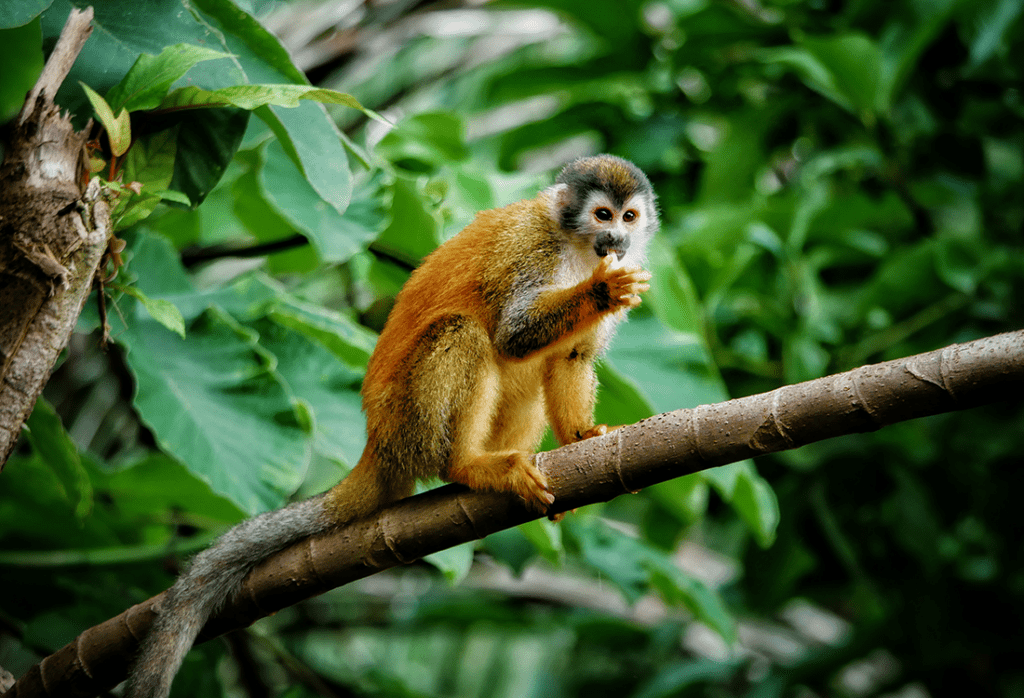
Tarcoles River mouth holds one of Central America’s largest crocodile populations alongside scarlet macaws
Uvita’s whale tail sandbar is one of Costa Rica’s most distinctive natural formations, visible at low tide
The Quepos to Dominical drive is one of the most scenic coastal roads on the Pacific side
A week at Villa Firenze with a Jeep Rubicon and concierge is the most complete way to experience all of it
Most visitors see the same stretch of coastline. Jacó, Manuel Antonio, maybe Tamarindo. The ones who stay longer find something different entirely.
Costa Rica’s Pacific side holds stretches of coast that do not appear on highlight reels, do not require a tour group, and do not feel like they belong to anyone else yet. This is where to find them.
Why the Pacific Side Rewards Slow Travel
Six hundred miles of coastline cannot be understood in three days. The Pacific side changes character every hour of driving, from the dry golden hills of Guanacaste in the north to the dense primary rainforest of the Osa Peninsula in the south, and the places worth finding most are rarely the ones with the biggest signs.
Slow travel here means something specific.
It means having a private base to return to each evening, a concierge who knows which road to take and when, and enough time to let the coast reveal itself rather than chasing it. The stretches below are all within reach of Los Sueños.
None of them require more than a half day. All of them are better when you are not in a hurry.
At a Glance: Beyond the Usual Stops
Area
Distance from Los Sueños
Best For
Punta Leona
~15 min
Calm swimming, paddleboarding
Playa Hermosa
~10 min
Surfing, sunrise walks
Playa Esterillos
~50 min
Quiet beaches, local feel
Tarcoles River Mouth
~30 min north
Wildlife, crocodiles, macaws
Quepos to Dominical
~1.5 hrs south
Scenic drives, fishing villages
Uvita
~2.5 hrs south
Whale watching, whale tail sandbar
Beyond the Usual Stops: Six Pacific Coast Stretches Worth Finding
These six stretches sit within two and a half hours of Los Sueños. Each one rewards those who arrive without a fixed schedule and leave later than planned. If you are looking for a private place to base yourself while the coast reveals itself slowly, there is nowhere better positioned than Villa Firenze.
1. Playa Blanca and Punta Leona
How close: Approximately 15 minutes by car from Villa Firenze, one of the nearest quiet shorelines to Los Sueños
On the water: Calm, sheltered swimming and paddleboarding along a beach largely bypassed by travelers heading south to Jacó
What most people miss: The beach sits behind a resort entrance that most drivers assume is private, so the shoreline stays uncrowded even when the surrounding area is not
Most travelers drive straight past the Punta Leona turnoff without slowing down. The beach behind it is calm, sheltered, and genuinely unhurried.
2. Playa Hermosa
How close: Approximately 10 minutes south of Villa Firenze, just below Jacó
What stands out: The quieter southern end of the beach before 7am, when the sand is cool, the light is low, and almost no one else is there
Known for: Deep charcoal volcanic sand and consistent surf that draws competitors internationally, though most visitors only ever see the northern end near the access road
Playa Hermosa is well known among surfers, but the experience of walking the southern stretch at sunrise is something most visitors miss entirely. The
surf picks up through the morning and the crowds follow, but that first hour belongs to almost no one.
3. Playa Esterillos
How close: Approximately 50 minutes south, three connected sections: Este, Centro, and Oeste
The local angle: Esterillos Este functions as a genuine local beach, visited by residents on weekends and almost entirely overlooked by tourists even during peak dry season
What it feels like: Wide dark grey sand, long open sight lines, no resort infrastructure, and the kind of quiet that only exists where tourism has not yet set its pace
The road to Esterillos Este takes you through small communities and past farmland before the coast opens up.
Locals Park along the grass verge and walk down to the water without fanfare. It is one of those places that feels like a coincidence to find, which is exactly why it is worth seeking out.
4. Tarcoles River Mouth
How close: Approximately 30 minutes north of Villa Firenze, where the Tarcoles River meets the Pacific at the edge of coastal mangrove forest
Wildlife window: Dawn and dusk are the most active periods, when crocodiles surface along the muddy banks and scarlet macaws move through the canopy in pairs overhead
Scale: The Tarcoles estuary holds one of the highest concentrations of American crocodiles in Central America, with local guides and crocodile-tour operators citing populations in the thousands, visible from the bridge above the river mouth.
It is the kind of place that takes five minutes to reach from the road and stays with you considerably longer.
For guests curious about the exotic wildlife of Costa Rica, this is one of the most accessible and genuinely dramatic encounters on the Pacific side.
5. Quepos to Dominical Stretch
How close: Approximately 1.5 hours south of Villa Firenze, a coastal drive connecting Quepos, Manuel Antonio, and Dominical
What the road holds: Hidden lookouts that appear without warning, fishing communities where boats are pulled onto grass beside the highway, mangrove boat rides, canopy tours, and access to national park coastline
Why it works as a day: The drive itself is half the experience, and stopping without reason is the correct approach
This stretch rewards those who drive it slowly. The road passes through places that do not announce themselves, and the best views tend to come just after a bend rather than at a designated pull-off.
6. Uvita and Marino Ballena National Park
How close: Approximately 2.5 hours south of Villa Firenze on the Southern Pacific Coast
The formation: A naturally formed whale tail sandbar emerges at low tide, a tombolo formation, a rare type of sandbar that connects an island to the mainland; found in only a small number of places worldwide, best seen in the dry season months from December through April
The atmosphere: Uvita moves at its own pace. Shops close earlier. Roads stay quieter. Many visitors end up extending their stay beyond what they originally planned
Uvita is not undiscovered, but it is unhurried in a way that sets it apart from every other stop on this coast.
The whale tail sandbar brings people here, but the atmosphere keeps them longer than expected. There is something genuinely contemplative about this stretch of Southern Pacific coastline, open, undeveloped, and indifferent to trends.
For those who want whale watching in Costa Rica paired with a coastline that still feels untouched, Uvita is where that combination exists.
Making the Pacific Coast Yours
Six stretches. Two and a half hours in any direction. All of it accessible from one place.
Villa Firenze at Los Sueños Resort and Marina sits at the geographic center of the Central Pacific, positioned to reach every destination in this guide without an early flight or a hotel transfer. The Jeep Rubicon leaves when you want it to.
Concierge specially builds the itinerary around what the group wants to find, whether that means dawn at Tarcoles, a slow drive to Dominical, or an afternoon at Esterillos Este with nothing planned after.
After a day on the road, the villa holds everything else.
A private chef dinner already in motion and a terrace where the Pacific settles into something quiet.
Affluent travelers now prioritize privacy and space over status, per Skift 2025
75% of ultra-high-net-worth travelers cite safety and security as top travel priorities (Virtuoso 2025)
Costa Rica’s conservation law makes seclusion structural, not marketed
Los Sueños is a gated private community built for privacy-seeking travelers
A private villa gives one group the entire property, full staff, and complete schedule
The most sought-after thing in luxury travel right now cannot be upgraded, purchased at the front desk, or added to a room service menu. It is privacy.
Not a corner suite or a do-not-disturb sign.
Real privacy is control over who shares your space, who prepares your meals, and whether anyone outside your group knows you are there at all.
This guide examines why that shift happened, what it means in practice, and why Costa Rica’s Pacific Coast has become one of the places the world’s most discerning travelers come to find it.
How Luxury Travel Shifted Toward Privacy
For two decades, luxury travel was defined by accumulation. Brand, star rating, spa menu length, thread count. The more a property offered, the more desirable it was.
That model has quietly lost its authority.
According to recent Virtuoso Luxury Travel Trends Data, overall future travel bookings of $50,000 or more are up 35% year-over-year. The spending has not slowed; instead, the underlying priorities have shifted. Who else is sharing your environment now matters far more than the amenities a building contains.
This demand for total control over one’s environment is echoed by the elite clientele who utilize the estate as a strict operational sanctuary. As one high-profile executive recently noted following an extended, discreet stay at the property:
“The true luxury wasn’t just the helipad or the private chef; it was the fact that for an entire week, the outside world completely ceased to exist. We had absolute control over our environment, our schedule, and our peace of mind.”
What Privacy Actually Means in a Luxury Context
Privacy in a luxury context is specific and demanding. Most hotels, regardless of star rating, cannot fully deliver it.
Control Over Your Environment
A luxury hotel suite is an excellent room inside a building that belongs to hundreds of other guests simultaneously.
The pool is shared. The lobby, the dining room, and the lift are all experienced alongside strangers you did not choose.
No shared pools, no hotel lobbies, no strangers at the next table
The ability to set the pace, menu, schedule, and guest list entirely
A hotel suite ends at the room door. Control over the environment does not begin there.
Staff Who Know You
Hotel concierge teams manage hundreds of guests simultaneously, rotating shifts, working from reservation systems rather than memory.
A private villa operates differently. The same concierge who greets you on arrival knows by the third morning that one guest prefers coffee before anything else happens.
That attentiveness exists only when a team is dedicated to one group for the full duration of a stay.
The Space to Be Unreachable
The most valued form of luxury in 2025 is the ability to be genuinely unobserved. No lobby encounters, no other guests noticing you at breakfast, no sense that the space you are in is simultaneously someone else’s.
For travelers who spend most of their lives visible and performing, a property that removes that pressure is the point of the trip.
Why Costa Rica Has Become a Privacy Destination
Costa Rica does not manufacture seclusion. It simply has not destroyed it.
Nearly a quarter of the country is protected under conservation law, limiting overdevelopment that has compromised other tropical destinations
Rainforest, elevation, and private coastline create natural seclusion that is structural rather than curated
Los Sueños Resort and Marina is a gated private community on the Central Pacific, purpose-built around controlled access and absolute discretion
Costa Rica’s combination of geography, law, and infrastructure makes it one of the few places where genuine luxury travel and real seclusion share the same address.
Private Villas vs Luxury Hotels: What the Difference Feels Like
The gap shows in arrival, meals, and how a day unfolds.
Arrival
You land, transfer, enter a busy lobby, hand over a card, and reach your room having been seen by forty strangers.
At Villa Firenze, the helicopter lands directly on the property. The concierge is already there. The gate closes and the space is yours before you put down your bag.
Dining
Luxury hotels subject guests to rigid restaurant operational hours and shared dining rooms. A generic villa rental may provide an outsourced cook, but Villa Firenze includes a dedicated, highly trained private chef and a full, exclusive hospitality staff solely committed to your party.
The menus and dining schedules are dictated entirely by your preferences, not a resort kitchen’s time limits.
The Day
A luxury hotel suite ultimately ends at your room door, forcing you to share pools and spas with strangers. True luxury means physical isolation without a drop in service quality.
Nestled securely within the rainforest canopy of the Central Pacific coast near Los Sueños, Villa Firenze ensures your group controls 100% of the physical space from the zero-edge pool to the surrounding grounds, with zero outside intrusions.
What This Looks Like at Villa Firenze
Villa Firenze at Los Sueños is a fully private, exclusive property on Costa Rica’s Central Pacific Coast. Every suite, every outdoor space, the infinity pool, the helipad, and the full staff belong exclusively to one group for the duration of the stay.
The top amenities at Villa Firenze from coastal day trips to the Jeep Rubicon are arranged through one point of contact, usually before they are asked for.
Where You Stay Determines How Much Privacy You Actually Get
Privacy in luxury travel is the baseline now. For a growing number of travelers, the property that delivers it completely is the only property worth considering.
On the Pacific Coast, eating outdoors runs deeper than any restaurant trend. It’s simply the default way Costa Ricans have always eaten.
Warm, dry corridor evenings, roughly 22 to 25°C year-round, make indoor dining the exception rather than the rule.
The soda, Costa Rica’s neighborhood eatery, is almost always open-sided, built around long tables and unhurried meals.
Fresh Pacific catch shows up more often on coastal plates, though core dishes like casado and ceviche remain nationwide staples rather than regional exclusives.
The coast offers every register of open-air dining, from feet-in-the-sand sodas to marina-front terraces near Los Sueños.
A private villa strips away the last constraint of outdoor dining, other diners, letting the same coastal habit unfold entirely on your own schedule.
Nobody in Jacó has ever asked for a table by the window. There is no window. That’s the whole point.
Walk through any beach town on this stretch of coast on a Tuesday evening and the same pattern shows up everywhere. Doors are propped open. Tables spill onto sand.
A soda owner is fanning a grill three feet from the sidewalk while a family two tables over finishes lunch two hours after ordering it, because nobody here is watching a clock.
First time visitors usually assume this is a tourism thing; something built for Instagram and TripAdvisor reviews. It isn’t.
Ticos have been eating this way long before either existed, and the habit runs a lot deeper than atmosphere. Dive in to know why open-air dining is central to life on Costa Rica’s Pacific Coast.
The Climate Does Most of the Work
The Central Pacific sits in a dry to tropical corridor, drier and steadier than the Caribbean side of the country.
Evenings here run warm rather than punishing, which is the actual reason so many dining rooms stay half empty even during high season.
Season
Evening Temperature
Character
Dry (Dec to Apr)
23 to 25°C / 73 to 77°F
Warmer, stable, mostly rain free
Rainy (May to Nov)
22 to 24°C / 72 to 75°F
Slightly cooler, cloud cover softens the heat
There’s no glass separating a diner from the breeze off the water or the last light over the bay in either season. The meal absorbs the environment instead of shutting it out.
That’s a good part of why a plate of ceviche eaten at a wobbly plastic table on the sand tends to outlast the memory of a much fancier dinner somewhere else entirely.
There’s a practical side to this too. Buildings without walls need less cooling, less electricity, and less upkeep, which is part of why so many family run spots along this coast have stayed open sided for decades.
The Soda is the Whole Culture Packed into One Building
Ask a Tico where to eat and you’ll usually get pointed toward a soda, Costa Rica’s version of a neighborhood diner, almost always open sided by design rather than by budget.
The menu barely changes from one soda to the next. The center of the plate is casado, gallo pinto, whatever fish or produce came in that morning.
Conversation and coffee stretch on well past the last bite, tables turn slowly, and nobody hovers nearby with a bill. Coastal sodas lean harder into fish than their inland cousins, but the bones of the experience stay identical from a fishing town on the Pacific to a neighborhood corner in the Central Valley.
Anyone curious about the wider menu behind this habit can dig into our guide to Costa Rican food for the full picture of what’s actually on the plate nationwide.
What Actually Changes About the Food Once You’re Outside
Most travel blogs on this topic will tell you the Pacific Coast has some secret dish found nowhere else in the country. It doesn’t, and pretending otherwise does the region a disservice.
Here’s the direct version for anyone skimming for a quick answer. Costa Rican Pacific Coast cuisine centers on fresh caught seafood, tuna, mahi mahi, red snapper, layered onto the same nationwide staples found everywhere else, casado and ceviche included.
The difference is sourcing distance, not recipe.
What genuinely shifts on the coast is proximity. Fish moves from ocean to plate in a matter of hours rather than days. The seasoning and technique stay recognizably Costa Rican the entire way through.
Any menu that claims a Pacific exclusive dish is doing marketing, not geography, and a good server will usually admit as much if you ask them directly.
More detail on how these staples come together lives in our Costa Rican cuisine guide.
The Spectrum from Feet in the Sand to a Marina Table
The coast covers the full range of open-air dining, and each register changes the pace of a meal without changing the underlying habit behind it.
Spot
Location
What to Expect
Coco’s Beachfront Restaurant
Herradura
Tables set right into the sand
El Pelícano
Herradura
Seafood specialist running since 1983
Villa Caletas
Near Los Sueños
Open air amphitheater built for sunset
KoKo Gastro Bar
Jacó
Beachfront build blending indoor and outdoor seating
Clarita’s Beach Bar and Grill
Jacó
Local institution running since 1964
Marina front terraces near Los Sueños turn the same idea up a notch in polish without changing the principal underneath it. Nobody at any of these tables is checking a watch, and nobody’s staring at drywall.
Every spot listed above still shares one variable nobody at the table controls, the group at the next one over.
A private terrace removes that piece of the equation completely. On stays that include a private villa like Villa Firenze, meals go outside often, whether that’s a long table near the grill or a quieter setup closer to the pool depending on the evening, and the kitchen builds each menu around whatever’s fresh that day rather than a printed list built for turning tables quickly.
Same coast, same ingredients, minus the crowd at the next table.
Anyone curious what a day built around that kind of pace actually looks like can browse the wider list of things to do in Costa Rica beyond the dinner table.
A Coastline That Never Learned to Eat Indoors
The real thread running through all of this was never really about the fish or the recipe. It’s a habit built into the place itself, doors left open on purpose, terraces chosen over dining rooms by default, meals that run long because nobody’s in a hurry to clear the table.
Spend a week eating outdoors on this coast and something clicks that no itinerary ever quite manages to explain.
The table was never really the point of any of it. The missing wall was.
Complete exclusivity: one group, one property, no shared spaces or divided attention
Villa Firenze holds up to 10 guests across four suites and one convertible room
Helipad arrival directly onto the property, no transfers, no delays
Direct flights from most major US hubs, East and West Coast, in well under a day’s travel
All activities from sportfishing to golf simulator arranged through one concierge
Every day closes with a private chef dinner, where the real conversations happen
When was the last time a genuinely important decision came out of a hotel conference room?
Most executive offsites are planned with good intentions and undermined by the wrong environment. The location changes. The dynamic does not.
Senior leaders arrive, perform, and return having covered the agenda without having changed anything.
The environment is not a detail. It is the variable that determines whether an offsite produces something real or produces a set of slides.
This guide covers what that environment actually requires, and why a private villa in Costa Rica delivers it in ways a resort conference package is structurally unable to.
What an Executive Offsite Actually Needs to Deliver
Getting the location right means understanding what a senior leadership group actually needs from four or five days away together.
Separation: A genuine break from office environment, routine, and the pressure of being visible
Dual-mode space: Structure in the morning, unstructured conversation in the afternoon
Privacy: No other companies in the building, no shared floors, no corridor run-ins
Ease: A setting that puts leaders at ease rather than keeping them in performance mode
Why a Private Villa Outperforms a Resort for This Use Case
Resort properties are excellent at serving large numbers of guests simultaneously. That is precisely the problem for a senior leadership group that needs the opposite.
Resorts still make sense in some cases, very large groups beyond villa capacity, multi-track agendas running parallel sessions, or budgets where a full-property buyout isn’t realistic. For a senior leadership group of six to ten where focus and privacy matter more than scale, the calculation shifts.
Shared Spaces Work Against Strategic Thinking
The environment: Other guests, other agendas, and other companies occupying the same building and the same dining room
The effect: Shared public spaces keep people in a version of performance mode that structured sessions alone cannot undo
The cost: The psychological separation that makes an offsite valuable never fully arrives
Conference Infrastructure Designed for Scale
The setup: Pre-set AV, fixed catering windows, scheduling built around the property’s operations
The result: The agenda bends to the venue rather than the other way around
What changes at a villa: The schedule, the meals, and the pace are built entirely around the group
Attention Divided Across the Property
The ratio: Hotel staff serve hundreds of guests at any given time
The difference: A team dedicated to one group of ten responds, anticipates, and operates at an entirely different level
In practice: Things are done before they are asked for, not after
Villa vs Resort: What Changes for a Senior Leadership Group
Factor
Resort
Private Villa
Property access
Shared with other guests
Exclusive to one group
Staff attention
Across the full property
Dedicated to one group only
Scheduling
Around hotel operations
Around the group’s agenda
Privacy
Shared lobbies and dining
Complete throughout the stay
Meals
Fixed catering packages
Private chef, shaped daily
Energy
Public and shared
Private and focused
What a Private Villa Gives an Executive Group
A resort sells access to amenities. A private villa gives a group the entire property to themselves. For senior leadership, that distinction shapes everything that follows.
Complete Exclusivity
When a group books Villa Firenze, they book all of it. Every suite, every space, every staff member for the full duration. No other companies on the property, no shared scheduling, no low-level friction of being in a semi-public environment.
Confidentiality is protected by design, not by request.
The terrace, the pool, the outdoor dining area, and open Pacific views create conditions where people talk differently than they do in a conference room.
Many executives report that their best strategic conversations happen away from a conference table, and Villa Firenze is built around spaces that blur the line between working and unwinding.
Staff Built Around One Group
The concierge, private chef, and villa team have one focus for the duration of the stay.
Meals are shaped around the group’s schedule rather than a kitchen’s service windows. Most things are handled before they are asked for.
Recreation Without the Coordination
On property: X-Golf simulator, infinity pool, jacuzzi, yoga and wellness, outdoor BBQ dining
Off property: Sportfishing at Los Sueños Marina, coastal day trips, rainforest excursions
All of it arranged through one concierge, nothing coordinated through third-party vendors or resort activity desks. See the full list of amenities included with every stay.
Why Costa Rica Works for Executive Offsites
A strong location choice is one that the CFO approves and the team actually looks forward to. Costa Rica clears both bars.
Flights: Direct from Miami (~2.5 hrs), Houston (~3.5 hrs), New York (~5 hrs), Los Angeles (~6 hrs)
Time zone: CST with no daylight saving, fully compatible with US East and West Coast business hours
Environment: A 2021 randomized controlled study published in Environmental Research found that regular nature exposure during work hours lowered salivary cortisol by nearly 30% and improved attention and information-processing speed. The Pacific Coast delivers that same environment without asking anyone to rough it.
What an Executive Offsite at Villa Firenze Looks Like
The helicopter lands directly on the property. There are no transfers, no hotel lobbies, no queues. The offsite starts the moment the group arrives.
Mornings run on the terrace. Afternoons open up. Sportfishing, the golf simulator, a coastal drive, or nothing at all. Recreation that requires no signup sheet and no activity desk.
Evenings close with a private chef dinner, shaped around what the group wants and served without a time limit. It is the meal where the day’s thinking settles into something worth keeping.
By the end of the week, the group has had the structured time, the unstructured time, and the shared experience that produces something a conference room never does.
Costa Rica holds roughly 5% of the world’s biodiversity despite occupying just 0.03% of Earth’s surface, per the Royal Botanic Gardens Kew
Over 300 medicinal plant species are actively used in communities across Costa Rica, many growing in home gardens and along the Pacific Coast
The Bribri indigenous community has practiced plant-based healing for centuries
All plant information reflects traditional and historical use only and is not intended as medical advice
Villa Firenze’s private chef incorporates local seasonal herbs into daily menus, and the concierge arranges guided rainforest and wellness excursions from Los Sueños
Long before wellness became an industry, Costa Rica’s forests were already doing the work. The plants growing along the Pacific Coast’s riverbanks, rainforest edges, and kitchen gardens have been part of local healing traditions for centuries.
This guide covers eight of them, what they are, where they grow, and why the Pacific Coast remains one of the most quietly compelling destinations for travelers who take this seriously.
Why Costa Rica Is One of the Most Plant-Rich Countries on Earth
Costa Rica occupies just 0.03% of Earth’s land surface yet holds an estimated 5% of the planet’s total known species, a ratio the Royal Botanic Gardens Kew describes as one of the most remarkable in global ecology.
Positioned between North and South America, flanked by two oceans, and layered with volcanic mountain ranges and coastal rainforest, the country became a biological bridge and never stopped accumulating species.
Over 300 medicinal plant species are actively used in communities across the country, a figure that reflects daily practice across communities.
These plants appear in garden beds, along trails, and on market stalls from Guanacaste to the Osa Peninsula.
Eight Plants the Pacific Coast Has Always Known About
Note: The following reflects traditional and historical use only and does not constitute medical advice. Consult a qualified health professional before using any plant-based remedy.
These plants grow in gardens, along roadsides, and in the kitchens of Pacific Coast communities. They have simply been here longer than the wellness industry has.
1. Guanabana / Soursop (Annona muricata)
Medicinal property: Fever relief, inflammation, and digestive support
The guanabana tree grows throughout the Central and Southern Pacific, recognisable by its large spiny green fruit that looks like it was designed by someone who had never seen a fruit before.
Costa Rican communities have used it in teas and preparations for fever, digestive complaints, and inflammation, documented by the TRAMIL network.
It is the kind of tree that grows in a backyard and gets taken completely for granted until someone from outside the country asks what it is.
2. Moringa (Moringa oleifera)
Medicinal property: Energy, immunity, and nutritional tonic
Moringa grows quickly, needs little encouragement, and produces leaves and seeds that Pacific Coast communities have used for generations as a nutritional and energising tonic.
Sometimes called the miracle tree in wellness circles, its traditional use for supporting energy and immunity is well documented.
On the Pacific Coast it appears quietly, growing beside vegetable plots and farm fences.
3. Curcuma / Turmeric (Curcuma longa)
Medicinal property: Anti-inflammatory, joint pain, and digestion
Turmeric is the plant that stains everything it touches, including cutting boards, fingers, and the reputations of anyone who dismisses it as a trend. Its traditional anti-inflammatory use across Central America predates every wellness café that has put it on a menu by several centuries.
The TRAMIL network documents its use for joint pain and digestive complaints. In Costa Rica it appears in both home gardens and the growing farm-to-table wellness scene along the Pacific.
4. Noni (Morinda citrifolia)
Medicinal property: Immune support and natural pain relief
Noni is the fruit that coastal Pacific communities have used for generations despite the fact that it smells, diplomatically speaking, like very ripe cheese.
Documented by the National Center for Complementary and Integrative Health for its traditional use in immune support and pain relief, noni occupies an interesting position in plant medicine: widely used, effective according to those who use it, and deeply unappealing to first-time visitors who encounter it by smell before sight.
5. Zarzaparrilla (Smilax domingensis)
Medicinal property: Joint pain relief and general body tonic
Zarzaparrilla is a climbing vine that moves through the Pacific lowland forest with quiet persistence, used traditionally as a general tonic and for joint pain across Central America.
You will find it growing along secondary forest edges within an hour of Los Sueños, used by communities who have been making preparations from its root for longer than anyone can trace.
6. Dormilona (Mimosa pudica)
Medicinal property: Sedative, nerve calm, and muscle tension
Touch a leaf of the dormilona and it folds inward immediately, closing like someone caught reading in bed at midnight.
The name translates to sleeping lady, which is either a coincidence or the most accurate plant name in the tropics, because the same mechanism that makes the plant retract from touch mirrors its traditional use as a sedative.
Costa Rican healers have prescribed it as a tea and tincture for centuries to ease insomnia, calm nerve pain, and release muscle tension.
7. Manzanilla / Camomile (Matricaria chamomilla)
Medicinal property: Digestive relief, restlessness, and sleeplessness
Camomile in Costa Rica needs no introduction.
It is in every home, every grandmother’s kitchen, and every small tienda from Jacó to Uvita. Pacific Coast communities reach for it at the first sign of a stomachache, a restless night, or a child who will not settle.
The most ordinary plant in this list is also the most consistently used, which makes it something more interesting than ordinary.
8. Cilantro (Coriandrum sativum)
Medicinal property: Digestive aid and anti-inflammatory support
Cilantro hides its medicinal credentials behind its culinary ones. In Costa Rica it is as fundamental to cooking as salt, appearing in gallo pinto, ceviche, and almost every sauce from a Pacific Coast kitchen.
Traditional healers across Central America have used cilantro tea for digestive complaints and as an anti-inflammatory remedy for centuries.
Papaya seeds, from the same domestic kitchen tradition, have been used separately as a digestive tonic across the region. Two plants hiding in plain sight in every Costa Rican home.
How These Plants Shape Wellness Experiences on the Pacific Coast
Here is how they translate into experiences worth building a trip around.
Botanical Garden Visits
What they offer: Guided tours through medicinal plant collections with local naturalists who identify, name, and explain the traditional use of each species.
Access: Botanical gardens near the Central Pacific are free to visit, among the most accessible introductions to Costa Rica’s plant heritage available to travelers.
What to expect: A slow walk through a living inventory of healing flora, best experienced with a guide who knows which plant is which before you have to ask
Rainforest Wellness Walks
What they are: Guided jungle walks with local naturalists identifying medicinal flora along Pacific Coast trails, available through eco-lodges and wellness operators near Jacó and Los Sueños
The difference a guide makes: The same trail walked alone and walked with a local naturalist are two entirely different experiences. One is a hike. The other is a conversation with the forest.
Arranging one: Half-day guided experiences can be arranged through the villa’s concierge
Farm to Table Herbal Cuisine
The connection: Pacific Coast chefs and private cooks have incorporated medicinal herbs into seasonal menus long before the term farm to table existed
In practice: Turmeric in broths, cilantro as both flavour and function, guanabana in fresh preparations, moringa leaves alongside market vegetables
The point: Traditionally, many Pacific Coast ingredients have served both culinary and wellness roles.
What Wellness Travelers Should Know Before Visiting
Engage Responsibly
The most effective way to engage with Costa Rica’s plant medicine traditions is through certified local guides and established wellness operators.
Self-administering plant remedies without expert guidance is inadvisable. Some tropical species require precise preparation, and the knowledge behind traditional use has been developed over generations for good reason.
Best Time for a Wellness Trip
Dry season (December to April): Most consistent conditions for outdoor botanical walks, garden visits, and rainforest excursions
Green season (May to November): The forest at its most lush, crowds thinner, Pacific light more dramatic
Villa Firenze at Los Sueños is a fully private base with a concierge who knows the coast, a private chef who cooks with the seasons, and a yoga and wellness amenity built into every stay.
Concierge also arranges guided rainforest walks and botanical excursions for guests who want to go further than the terrace.
The private chef shapes daily menus around what is fresh and local, which on the Pacific Coast means medicinal herbs appear on the plate the same way they appear in the forest: quietly, doing more than one thing at once.
Costa Rica’s medicinal plants have been working quietly along the Pacific Coast for centuries, in home gardens and rainforest trails, in morning teas and evening meals, in the hands of healers who spent fifteen years learning what the rest of the world is only beginning to ask about.
For wellness travelers who stay long enough to explore them, the Pacific Coast offers something genuinely rare.
The Pacific Coast runs 600 miles, from dry tropical forest in the north to dense rainforest in the south
A reliable dry season from December to April makes the Pacific far easier to plan around than the Caribbean
The two coasts are cultural and seasonal opposites, different wildlife, different weather, different character entirely
Humpback whales, scarlet macaws, sea turtles, and crocodiles are all accessible from the same coastline
Los Sueños Marina is one of the world’s top sportfishing destinations as well
Most coastlines in Central America are beautiful. Few are genuinely layered. Costa Rica’s Pacific side is 600 miles of geography, culture, and wildlife that shifts every few hours of driving and rewards everyone who stays long enough to pay attention.
Here is what makes it different, and why serious travelers tend to come back to this coast above the others.
The Geography That Sets It Apart
The Pacific Coast does not have a single character. It changes shape, climate, and mood across its full length, and that range separates it from every other coastline in the region.
Northern range: Guanacaste runs through dry tropical forest, long exposed bays, and months of uninterrupted sun
Central shift: Moving south through the Central Pacific, vegetation thickens and the landscape becomes greener and more dramatic with every kilometer
Southern edge: By the Osa Peninsula, primary rainforest meets the ocean at the edge of jungle that has stood for thousands of years
Regional contrast: Nicaragua, Honduras, and El Salvador have Pacific shorelines but trend toward flatter, more uniform terrain with far less ecological range
The result: Landscape, wildlife, and weather that change every few hours of driving across a single connected coast
Pacific Coast vs Caribbean Coast
The Pacific bays are calmer, more sheltered, and more predictable. The Caribbean faces the open Atlantic, and the swells, humidity, and exposure reflect that directly.
Seasonally, when the Pacific is dry and settled from December through April, the Caribbean is often wet and harder to plan around.
Culturally, the Pacific is shaped by Spanish-speaking fishing and surf communities while the Caribbean carries Afro-Caribbean culture, English creole language, and a distinct tradition tracing back to Jamaican and West Indian migration.
For most travelers with fixed dates and outdoor plans, the Pacific offers significantly more certainty.
Factor
Pacific Coast
Caribbean Coast
Sea conditions
Calmer bays, sheltered
Exposed Atlantic swells
Dry season
December to April, reliable
No single reliable dry season
Culture
Spanish-speaking, fishing and surf towns
Afro-Caribbean, English creole influence
Wildlife
Whales, macaws, crocodiles, sea turtles
Tortuguero turtles, sloths, river wildlife
Best for
Planning certainty, outdoor activity
Culture, off-grid exploration
Best Pacific Coast Regions for Different Travelers
Traveler
Best Region
Surfers
Guanacaste, Pavones
Wildlife Lovers
Osa Peninsula
Sportfishing
Los Sueños, Central Pacific
Families
Central Pacific
Luxury Travelers
Los Sueños, Herradura Bay
What the Pacific Coast Does That Others Don’t
Four things define the Pacific experience and separate it from every other coastline in the region. Each one shapes the coast in a way that is difficult to find anywhere else in Central America.
The Wildlife Density
Whale seasons: Two humpback whale windows annually, July to October and December to April, one of the longest viewing periods in the world
Coastal range: Scarlet macaws, sea turtles, and crocodiles all accessible from the same connected coastline across Osa Peninsula and Central Pacific estuaries
Character: Wildlife encounters happen along roads, river mouths, and coastal tree lines, unmanaged and unscheduled
Few coastlines in the Americas concentrate this range of species within a single accessible zone.
The Pacific side supports wildlife that elsewhere would require entirely separate expeditions to reach. Scarlet macaws fly in pairs along the coastal tree line.
Crocodiles surface at river mouths a short drive from the marina. Humpback whales breach offshore during two distinct seasons, making this one of the only coastlines in the world where whale watching is possible across most of the calendar year. Plan a whale watching tour in Costa Rica from the Pacific side.
The Surf Culture
Range: World-class breaks run the full length of the coast, from Tamarindo and Guanacaste in the north to Pavones near the Panamanian border
Character: Pacific towns grew up around the water rather than around tourism infrastructure, and that sequence left something genuine behind
Distinction: Surf culture shaped these communities in ways resort development rarely does, and the difference is felt immediately on arrival
The Pacific holds world-class breaks at nearly every latitude, but the waves are only part of the story.
The towns that formed around them carry a lived-in character that resort-driven coastlines rarely develop. There is a reason surfer who discover this coast tend to return on their own terms rather than as part of a package.
Destination: Los Sueños Marina at Herradura Bay ranks consistently among the world’s premier sportfishing destinations by major fishing publications and tournament records
Access: Offshore topography drops sharply, bringing marlin, sailfish, yellowfin tuna, and mahi-mahi within minutes of the Central Pacific coast
Scale: Major international tournaments held here year-round draw serious anglers from across the world
Sportfishing on the Pacific Coast is a serious pursuit with serious infrastructure behind it. The combination of deep water close to shore, warm Pacific currents, and a world-class marina makes Los Sueños one of the few places where a productive day on the water is consistent rather than a matter of luck.
The Sunsets
Orientation: The Pacific faces west, meaning every evening ends with the sun dropping directly into open ocean
Contrast: The Caribbean faces east and catches sunrises. The Pacific owns the other end of the day entirely
Experience: The quality of light in the final hour before dark, across open water or a private terrace, becomes one of the most quietly defining parts of any stay on this coast
Travelers who base themselves on the Pacific consistently cite the evening light as something they did not expect to value as much as they did.
A west-facing coastline with unobstructed ocean views turns every day, regardless of what it held, into something that ends well.
The Quieter Side Most Travelers Miss
The well-known towns are entry points rather than destinations in themselves. The Pacific rewards those who move past them.
Tarcoles estuary: One of the most accessible crocodile habitats in Costa Rica, where the river meets the Pacific and birdlife along the banks is as dense as anywhere in the country
Boca Barranca: A local surf break near Puntarenas where the day’s catch is still unloaded directly onto the beach before sunset, unchanged by the tourism that surrounds it
Esterillos: Connected dark sand beaches south of Jacó that most visitors drive past, quiet enough in peak season to feel entirely your own
Undeveloped stretches: Sections of coastline within an hour of Los Sueños that see almost no foot traffic, even at the height of dry season
A single day gives you a beach. Three days give you a sense of the place. A week gives you enough time to slow down, move past the obvious stops, and find the version of this coastline that feels like it was waiting specifically for you.
And the best way to do that is from a base where the luxury is already settled; private chef, concierge, infinity pool, and a terrace facing the Pacific. That is what living in Villa Firenze and owning Costa Rica for a week actually looks like.
600 Miles In, and You Are Only Just Beginning
The Pacific Coast is not one place. It is a long, unhurried stretch of country that reveals a new layer every time you give it the chance. The travelers who understand it best are the ones who arrived with a plan and eventually set it aside.
For those ready to experience it on their own terms, Villa Firenze sits at the heart of the Pacific Coast, and the week starts the moment you land.
Formed over centuries from eroded volcanic lava rock along the Pacific Ring of Fire.
Playa Hermosa is the closest black sand beach to Villa Firenze, located just 10 minutes from Los Sueños.
Six featured beaches range from effortless day trips to remote, southern surf havens.
Far less crowded than white-sand alternatives, making them ideal for privacy-first travelers.
The dry season offers consistent sunshine, while the green season rewards photographers with dramatic backdrops.
Villa Firenze serves as the perfect base, offering concierge-arranged excursions and private chefs upon your return.
Costa Rica is famous for golden shores, but its most dramatic coastline is painted black.
Here are six Pacific Coast black sand beaches, from a 10-minute drive to a remote surf break five hours south, each worth the journey.
Why Does Costa Rica Have Black Sand Beaches?
Costa Rica sits along the Pacific Ring of Fire, where tectonic activity created a chain of active volcanoes whose lava rock and basalt break down over thousands of years through wave erosion into dark, fine-grained sand.
Black sand beaches are globally rare, requiring a precise combination of volcanic geology and sustained coastal erosion found only in Iceland, Hawaii, New Zealand, and pockets of Central America’s Pacific fringe.
What Makes Black Sand Beaches So Unique?
Dark sand against green rainforest and open Pacific creates a landscape more mesmerising and far less developed than Costa Rica’s busier white-sand destinations.
Many beaches sit adjacent to mangrove forests and river mouths, supporting distinct coastal wildlife. Unlike Jacó or Tamarindo, most see a fraction of the foot traffic, even in peak season.
At a Glance: Pacific Coast Black Sand Beaches Compared
Beach
Distance from Los Sueños
Best For
Surf
Best Time
Playa Hermosa
~10 min
Surfing, walking
Consistent
Dec to Apr
Playa Bejuco
~45 min south
Birdwatching, solitude
Moderate
Dec to Apr
Playa Esterillos
~50 min south
Photography, locals
Moderate
Dec to Apr
Playa Negra
~3.5 hrs north
Surfing, culture
Strong
Nov to Apr
Playa Matapalo
~1.5 hrs south
Wildlife, photography
Light
Dec to Mar
Playa Pavones
~5 to 5.5 hrs south
Serious surfing
World-class
Apr to Oct
Most Pacific Coast black sand beaches have no lifeguard presence. Always check local conditions before entering the water.
Best Black Sand Beaches on Costa Rica’s Pacific Coast
The Pacific Coast’s black sand beaches are not all the same. Each has its own character, distance, and reason to visit. Here is what sets each one apart.
1. Playa Hermosa, Puntarenas
Location: South of Jacó, approximately 10 minutes by car from Villa Firenze at Los Sueños
Special activity: Consistent beach break surfing; hosts international surf competitions year-round
Known for: The closest volcanic sand beach to Los Sueños, far quieter than neighboring Jacó
Deep charcoal sand, reliable surf, and an unhurried atmosphere make Playa Hermosa the easiest coastal day trip from Villa Firenze.
Suited to intermediate and advanced surfers. Pair it with water activities in Costa Rica arranged through the concierge for a full day out.
2. Playa Bejuco
Location: Central Pacific Coast, approximately 45 minutes south of Villa Firenze
Special activity: Coastal birdwatching along mangrove estuaries, excellent for wildlife photographers
Known for: One of the most undeveloped dark sand stretches on the Pacific, rarely crowded even in peak season
A long open beach backed by mangrove forest, no resort infrastructure, and regular sightings of scarlet macaws and shorebirds along the tree line. Ideal for walking and nature observation. Those curious about exotic wildlife in Costa Rica will find this estuary setting particularly intimate.
3. Playa Esterillos
Location: Central Pacific, approximately 50 minutes south of Villa Firenze; three connected sections: Este, Centro, Oeste
Special activity: Long coastal walks and golden-hour photography along a wide, open shoreline
Knownfor: Esterillos Este, the quietest section and a local favorite with minimal tourist traffic
Wide dark grey sand, long sight lines, and limited development give Esterillos Este a natural, unhurried character. For guests at Villa Firenze wanting a longer coastal drive with a local feel, this is one of the most quietly satisfying options on the Central Pacific.
4. Playa Negra, Guanacaste
Location: Near Paraíso, Nicoya Peninsula, approximately 3.5 hours north of Villa Firenze
Special activity: World-recognized right-hand reef break; fast, hollow, and consistent for experienced surfers
Known for: Costa Rica’s most famous black sand beach, with a laid-back surf culture unchanged for decades
Small local restaurants, a quiet road along the shore, and the dry tropical forest of the Nicoya Peninsula give Playa Negra a lived-in atmosphere. Worth building an overnight Guanacaste excursion around for guests focused
5. Playa Matapalo
Location: South Pacific Coast, approximately 1.5 hours south of Villa Firenze via a scenic inland drive
Special activity: Wildlife encounters including scarlet macaws, howler monkeys, and nesting sea turtles
Known for: The dramatic meeting point of Pacific rainforest and volcanic coastline
Dark sand backed by dense jungle, wildlife moving freely, and a drive through farmland and secondary forest make this a journey worth taking slowly. Best approached as a photography and nature day with no fixed agenda.
6. Playa Pavones
Location: Southern Pacific Coast near the Panama border, approximately 5 to 5.5 hours south of Villa Firenze
Special activity: One of the longest left-hand surf breaks in the world, running over a kilometer on the right swell
Known for: Remote, off-grid character and status as a pilgrimage destination for serious surfers worldwide
Not a casual day trip. The wave is the draw, and the surrounding primary rainforest, minimal development, and slow-paced reward those who extend their Pacific exploration into the country’s deeper south.
When to Go and What to Expect
Every season has its own perks in Costa Rica and witnessing the different moods of nature. The best time to visit depends on how you want to explore the beaches.
The dry season, December through April, brings clear skies and reliable beach conditions for day trips from Los Sueños.
The green season (May to November) delivers dramatic coastal light, preferred by photographers, though stronger swells and afternoon rain are expected.
Most Pacific black sand beaches have no lifeguard presence and strong rip currents. For a full seasonal guide, see the best time to visit Costa Rica.
Your Private Base for the Pacific Coast
Villa Firenze at Los Sueños Resort and Marina places you within reach of it all. Playa Hermosa is 10 minutes away. Bejuco and Esterillos are within an hour.
Concierge here arranges tailored coastal day trips built entirely around the group’s pace, whether that means early surf, a birdwatching walk, or a slow drive south.
After a day exploring the coast, guests return to the privacy and calm of Villa Firenze, a private chef dinner already in motion, the infinity pool open, and a terrace where the evening settles without a schedule.
That is what a perfect day at Villa Firenze looks like, and the Pacific Coast’s black sand beaches are simply where it begins.
Located 1.5 hours from San José with fully paved roads and a flat, 10-minute walk to the main viewing platform.
Features one of the world’s largest active volcanic craters
Because it is an active volcano, park rangers limit viewing time at the crater rim to roughly 20 minutes per group.
Combines active volcanic terrain with a lush cloud forest, scenic trails, unique wildlife like the Poás squirrel, and nearby coffee farms.
Offers the quickest, lowest-effort crater access in Costa Rica.
Few volcanoes let you walk up to an active crater without a hiking boot in sight. Poás does.
At 2,708 meters above sea level, a short paved path brings you face to face with one of the largest active craters on Earth. This is your complete travel guide to Poás Volcano, Costa Rica.
Where is Poás Volcano in Costa Rica?
Location and Geographic Setting
Poás Volcano sits in the Alajuela Province, within the Cordillera Central. It is the centrepiece of Poás Volcano National Park in Costa Rica’s Central Valley.
From San José, approximately 1.5 hours by road
From Juan Santamaría International Airport, approximately 1 hour
No 4×4 required. Fully paved roads all the way to the park entrance
Why Travelers Visit Poás Volcano
A main active crater approximately 1.5 km wide and 320 meters deep, one of the largest of its kind in the world
Laguna Caliente, a hyper-acidic crater lake that shifts between milky turquoise and sulphurous yellow
Laguna Botos, a calm, cold lake inside a crater dormant for 7,000 years
A dense cloud forest ecosystem starting just steps from the crater rim
Accessibility that no comparable active volcano in Central America matches
What Makes Poás Volcano Unique?
One of the Most Accessible Active Volcanoes in the World
Most active volcanoes demand a full day, serious gear, and significant effort. Poás asks for none of that.
Getting there: paved roads, no 4×4 required, roughly 1 hour from the airport.
Getting to the crater: a flat 10-minute walk from the parking lot
What surrounds it: strawberry farms, coffee country, and cloud forest
The Main Crater Experience
The scale registers slowly when you arrive at the viewpoint.
Width: 1.5 km across, one of the largest active craters in the world
Depth: 320 meters, with an acidic lake at the floor that glows and shifts color
Activity: steam rises from fumaroles; geysers have reached 250 meters at peak pressure
Visit format: Rangers escort groups of up to 50 visitors for approximately 20 minutes at the platform
The Surrounding Cloud Forest
Step back from the crater rim, and the landscape completely changes.
Botos trail: 1.4 km, 40 to 60 minutes, leading from the crater path to Laguna Botos
What you find: moss-covered trees, giant Gunnera leaves, orchids, and hummingbirds
Wildlife: the endemic Poás squirrel lives only here; the resplendent quetzal has been spotted on the trail
Laguna Botos: a calm, cold lake inside a crater dormant for 7,000 years, ringed by untouched cloud forest
Best Time to Visit Poás Volcano
Dry Season vs Green Season
Season
Months
What to Expect
Dry Season
December to April
Best crater visibility, clearer skies
Green Season
May to November
Frequent cloud cover, fewer crowds
Best Months Overall
January to March
Highest chance of clear crater views
Why Early Morning Visits Matter
Cloud cover rolls across the crater rim by mid-morning, and visibility drops to near zero. Book the 8 AM slot and arrive on time. Every time.
Weather Conditions to Expect
Poás sits at 2,708 meters. Temperatures average 10 to 18 degrees Celsius year-round, occasionally reaching the low 20s in the dry season afternoons. Cloud forest weather shifts fast. Pack layers and waterproof regardless of the season.
How to Visit Poás Volcano, National Park?
Here is what you need to know before planning to visit Poas Volcano
Tickets and Reservations
No walk-in tickets are sold at the gate. All entries require advance online booking through the official SINAC reservation system.
2 to 3 days minimum; dry season weekends fill 2 to 3 weeks out
Note: Pregnant women and people with high blood pressure or heart conditions are advised against visiting due to sulfur emissions at altitude.
What to Pack
Layers and a waterproof jacket
Closed-toe shoes on all trails
Water, snacks, and a light mask if you have respiratory sensitivity
Is Poás Volcano Safe to Visit?
Monitored and active. Poás entered an active phase of eruption in early 2025. OVSICORI declared a RED alert in April 2025, with ash columns reaching 3.5-4.7 km. The park runs on a dynamic access model, open when sensors allow, closed when they do not.
Sulfur and air quality. On higher-emission days, crater viewing time is reduced or suspended. Rangers decide in real time. Visitors with respiratory sensitivity should bring a light mask.
Before you go. Check the park status the morning of your visit at sinac.go.cr or call the park directly. Closures can happen fast. Refunds are offered if the park closes on your booked day.
Things to Do Near Poás Volcano
La Paz Waterfall Gardens
Approximately 30 minutes from the park and the perfect afternoon companion to a Poás morning.
Big cats, including pumas and ocelots, are in a sanctuary
Working on a farm with horses, cows, and toucans
Coffee and Strawberry Farms Around Alajuela
Strawberry farms along the Fraijanes and Poasito corridor
Coffee plantations with short tours and tastings
Local sodas serving coffee grown on the same volcano slopes
Local Towns and Scenic Stops
Sarchí, approximately 45 minutes from the park, is known for hand-painted artisan oxcarts.
Grecia, with its distinctive red metal church, is a short detour on the return to San José.
Pairing Volcano Adventures with Luxury Stays
Poás works well as a departure-day activity for travelers combining the Central Valley with the Pacific Coast. You can stay at Villa Firenze, a luxury estate on pacific coast.
Concierge at Villa Firenze regularly helps guests plan Poás for the final morning of their trip. Volcano at dawn, Pacific terrace by evening.
For first-time visitors, Poás wins. Easy road access, no strenuous hiking, and a dramatic active crater under two hours from the capital. Irazú suits solitude seekers. Arenal rewards longer stay with hot springs and wildlife.
Summit Sorted
Basically, Poás Volcano is the perfect day trip.
But once you’ve finished playing explorer at 8,000 feet, you can trade the volcanic mist for a private infinity pool and personal chef back at your ultimate luxury basecamp, Villa Firenze.
Arenal Volcano is resting safely, but the lower hiking trails remain open.
Visit February to March for the clearest views of the peak.
Hike old lava fields, climb waterfall steps, and hit hot springs.
Stay at least 3 nights; always pack rain gear and shoes.
Pair these rugged rainforest adventures with a luxury Villa Firenze stay.
Costa Rica has beaches that stop conversations, rainforests that reset nervous systems, and then it has Arenal Volcano: a perfectly symmetrical cone rising 1,633 metres above the northern lowlands, looking both ancient and alive.
This travel guide to Arenal Volcano, Costa Rica covers where it is, what to do, when to go, and where to stay.
Where is Arenal Volcano Located?
Arenal Volcano sits in the Alajuela Province of northern Costa Rica, just outside La Fortuna de San Carlos: a small town that punches well above its size for things to do.
Getting there:
From San José International Airport: 3 to 4 hours by road in dry season
Rainy season: Add 30 to 60 minutes for mountain road conditions. The tradeoff is mist-covered green valleys and cloud forest scenery that makes the drive its own activity
The volcano anchors Arenal Volcano National Park, bordered by dense rainforest on one side and Costa Rica’s largest lake on the other.
Why is Arenal Volcano So Famous?
On July 29, 1968, Arenal erupted without warning. Three villages were buried and the landscape was permanently reshaped. For four decades it was one of the most active volcanoes in Costa Rica, famous for dramatic lava flows and nighttime glow.
Around 2010, Arenal entered a resting phase. The volcano did not stop being interesting. It stopped being dangerous.
Current status (2026):
Classified as potentially active: fumarolic steam is visible most mornings
Summit and crater permanently closed to visitors
Lower lava field trails open year-round, with dry season offering the clearest cone views
Hot springs across the region remain fed by ongoing geothermal activity
Best Things to Do Around Arenal Volcano
Experience
Best For
Time Needed
Arenal Volcano National Park
Hiking and nature
2 to 4 hours
Natural Hot Springs
Relaxation and wellness
Half day
La Fortuna Waterfall
Scenic adventure
2 to 3 hours
Ziplining
Thrill seekers
2 to 4 hours
Hanging Bridges
Wildlife spotting
2 to 3 hours
Lake Arenal
Water activities and sunsets
Half day
Traveling with kids? The Baldi Hot Springs resort complex includes water park facilities: a solid family half-day worth building into the plan.
Visit Arenal Volcano National Park
The hero trail is Las Coladas: 2 km one-way, moderate, crossing the 1968 black lava fields with the cone directly overhead. Walking solidified lava with that view above stays with you.
La Peninsula trail (1.3 km, flat, handicap-accessible) works well for families and shorter visits. Park closes at 4 PM; last entry 3 PM. No food inside: pack water and snacks.
Wildlife along the trails includes coatis, howler monkeys, toucans, and basilisk lizards.
Relax in Natural Hot Springs
Geothermal activity heats underground water sources that surface naturally across the region.
The range runs from free roadside springs (best found with a local guide) to the full luxury of Tabacón Grand Spa Thermal Resort: thermal rivers flowing through rainforest.
Best time: Evenings, when the air cools and the contrast between warm water and cool forest makes its own kind of quiet.
Explore La Fortuna Waterfall
A 70 to 75 metre cascade fed by the Arenal River, plunging into a turquoise pool at the base of dormant Chato Volcano. Just 5.5 km from La Fortuna town.
Key facts:
530 concrete steps down with handrails and rest benches every 100 steps: 15 minutes down, 25 back up
Entry fee (2026): approximately $18 to $20 USD adults, $5 children 5 to 11, free under 5
Swimming is allowed when conditions are safe.
Dry season (December to April) offers the clearest water.
Arrive before 9 AM or after 3 PM to beat the crowds.
Arenal is one of the top ziplining destinations in Costa Rica. Sky Adventures Arenal offers multi-line runs with a sky tram gondola and hanging bridges combo.
Suitable for most ability levels; verify age and weight minimums at booking.
Take a Hanging Bridges Walk
Mistico Arenal Hanging Bridges Park is 16 bridges (6 hanging, 10 fixed) across 3 km of primary rainforest.
Open daily at 6 AM, last entry 3:50 PM.
Spot along the way:
Poison dart frogs and red-eyed tree frogs
Howler and spider monkeys
Over 200 bird species including toucans at eye level from the bridges
Coatis and basilisk lizards on the trail floor
A certified naturalist guide will find what you walk straight past. Worth every colón.
Experience Lake Arenal
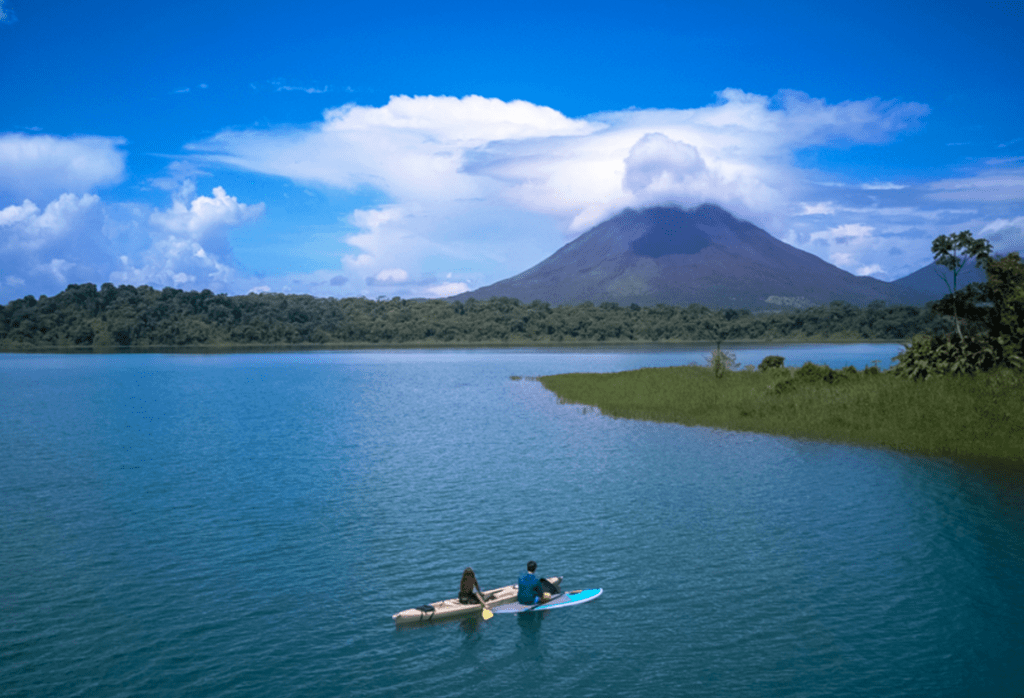
Costa Rica’s largest lake at 85 km², Lake Arenal supplies roughly 12% of the country’s hydroelectric power.
Activities include
kayaking
stand-up paddleboarding
windsurfing
Sunset on the lake with the volcano reflected in still water is the kind of moment a camera almost captures. For more water activities in Costa Rica, the Pacific Coast adds a whole other chapter.
Heavy afternoon rain, mornings only for activities
During rainy season, schedule everything before noon. Rain arrives reliably around 2 PM. Sunrise and sunset are consistent year-round at approximately 5:30 AM and 5:30 PM.
Wildlife Around Arenal Volcano
Arenal sits between multiple protected areas, creating one of the richest wildlife corridors in northern Costa Rica.
Commonly spotted:
Three-toed sloths in cecropia trees
Howler monkeys: their call carries up to 3 miles, heard long before they are seen
Spider and white-faced capuchin monkeys
Toucans, scarlet macaws, poison dart frogs, blue morpho butterflies
Ethical viewing: stay on marked trails, keep 5 metres from animals, no feeding, no flash on nocturnal species. For a broader look, explore exotic wildlife in Costa Rica.
How Many Days Do You Need in Arenal?
Minimum: 3 nights / 2 full days.
A tight 2-day plan:
Day 1: Hanging bridges at 6 AM, La Fortuna Waterfall mid-morning, hot springs at sunset
Day 2: Las Coladas lava field trail in the morning, Lake Arenal kayak or sunset in the afternoon, La Fortuna town for dinner
Thermal resort hotels like Los Lagos and Tabacón with hot springs on-site, volcano views
Boutique eco-lodges, as they are smaller, quieter, deeper into the rainforest
La Fortuna town hotels are convenient, social, walkable to restaurants and tours
Lakeside properties are more solitude, better wildlife access, sunset views over the water
For travelers looking to pair Arenal with Pacific Coast luxury, Villa Firenze at Los Sueños Resort and Marina makes a natural companion to this inland chapter.
Concierge plans full-day Arenal excursions for guests. The drive winds through coffee country, cloud forest, and some of Costa Rica’s most beautiful interior landscape: the kind of road that makes you forget you had a destination.
Travelers combining Arenal with the Pacific Coast often use Villa Firenze as a luxury base for the second half of their trip, with a private chef, infinity pool, and concierge waiting at the end of every adventure day.
Travel Tips Before Visiting Arenal
Pack a rain jacket always: La Fortuna averages 3,500 to 5,000 mm of annual rainfall. Seasons are guidelines, not guarantees
Start early: wildlife peaks between 6 and 9 AM. Trails and waterfalls are quieter too
Book tours ahead: popular operators fill weeks in advance during dry season (December to April)
Grip shoes for all trail and waterfall visits: lava fields and wet steps are unforgiving in sandals
Carry your own food: nothing is available inside the national park
Arenal Is Not the End of the Story
Arenal Volcano, Costa Rica delivers in a way few places do.
Morning hikes across lava fields, afternoons in geothermal water, evenings with howler monkeys calling from the canopy. Adventure, wellness, and nature sharing the same square kilometre.
When that chapter closes, the Pacific Coast is ready with something quieter, slower, and entirely its own. Los Sueños Resort and Marina is where the trip changes tone: from trails to terraces, from the volcano to the ocean.
Costa Rica’s churches reflect centuries of faith, craftsmanship, and local tradition.
Several churches date back to the colonial era and remain active places of worship today.
From Gothic facades to coastal chapels, each church offers a distinct architectural style.
The holiday season brings processions, music, and community celebrations across many towns.
Visiting churches in Costa Rica offers a quieter cultural perspective beyond beaches and rainforests.
Costa Rica is often associated with rainforests, surf towns, and volcanic landscapes. Yet some of its most memorable spaces stand quietly behind wooden doors and centuries-old bell towers.
Across the country, churches continue to shape community life in ways that feel deeply preserved. Mountain towns gather beneath cathedral spires. Coastal chapels overlook the Pacific. Candlelight and evening hymns still drift through town squares during the holiday season.
For travelers, these churches offer more than architectural beauty. They reveal a slower and more reflective side of Costa Rica, one shaped by faith, craftsmanship, and generations of local tradition.
A country celebrated for movement also leaves room for stillness.
Let’s explore some of the most historic churches Costa Rica holds within its hills, valleys, and coastal towns.
9 Historic Churches in Costa Rica
Some stand beside lively town squares. Others sit quietly beneath mist-covered hills or along the Pacific coast. Together, they reflect a side of Costa Rica that moves at a slower pace and carries centuries of history within its walls.
Tl; DR
Church
Location
Known For
Best Time to Visit
Basílica de Nuestra Señora de los Ángeles
Cartago
National pilgrimage site
July to December
Iglesia de San Isidro Labrador
Coronado
Gothic-inspired architecture
November to February
Iglesia de Orosi
Orosi Valley
Oldest functioning church
December to April
Parroquia Santiago Apóstol Ruins
Cartago
Historic earthquake ruins
Year-round
Iglesia de San Rafael
Heredia
Community celebrations
December
Iglesia de la Inmaculada Concepción
Heredia
Colonial interiors
December to February
Iglesia de Santa Cruz
Guanacaste
Folk traditions and festivals
January
Iglesia de Quepos
Quepos
Coastal church views
December to April
Iglesia de Grecia
Grecia
Iconic red metal design
Morning visits year-round
Basílica de Nuestra Señora de los Ángeles
Specialty: National pilgrimage site dedicated to La Negrita
Best Time to Visit: July to December
Location: Cartago
Why Visit: Historic architecture and Costa Rica’s most important religious tradition
This basilica in Cartago remains Costa Rica’s most important pilgrimage church. Originally built during the 17th century and later reconstructed after earthquakes, it continues to welcome thousands of visitors during La Romería, the country’s annual Catholic pilgrimage honoring La Negrita, Costa Rica’s revered Black Madonna figure.
Its Byzantine-inspired interiors, stained glass, and religious significance make it one of the country’s most recognized churches.
Iglesia de Orosi
Specialty: Oldest functioning church in Costa Rica
Best Time to Visit: December to April
Location: Orosi Valley, Cartago Province
Why Visit: Colonial history, preserved interiors, and scenic surroundings
Built in 1743, Iglesia de Orosi is considered the oldest functioning church in Costa Rica. Surrounded by the green hills of the Orosi Valley, the church preserves much of its colonial design through adobe walls, wooden interiors, and religious artwork.
The valley itself slows everything down a little.
Santiago Apóstol Parish Ruins
Specialty: Historic unfinished church ruins
Best Time to Visit: Year-round
Location: Central Cartago
Why Visit: A striking mix of history, architecture, and earthquake resilience
The Santiago Apóstol Parish Ruins remain one of the most recognizable historical landmarks in Cartago. Construction began in the early twentieth century, though repeated earthquakes prevented the church from being fully completed.
Today, the ruins sit within manicured gardens that give the space an almost cinematic stillness by late afternoon.
Iglesia de San Rafael
Specialty: Religious festivals and baroque altar
Best Time to Visit: December
Location: San Rafael, Heredia
Why Visit: Local traditions, celebrations, and community atmosphere
Iglesia de San Rafael reflects the strong connection between Costa Rican churches and local community life. Known for its baroque altar and festive gatherings during the holiday season, the church becomes especially lively during regional celebrations and religious processions.
The surrounding town square often feels just as important as the church itself.
Iglesia de la Inmaculada Concepción
Morning visits are often the quietest.
Specialty: Colonial-era craftsmanship and wooden interiors
Best Time to Visit: December to February
Location: Central Heredia
Why Visit: Historic charm and well-preserved interior details
Set near Heredia’s central park, Iglesia de la Inmaculada Concepción is admired for its elegant colonial architecture and intricate wooden interiors.
The church remains closely tied to the city’s cultural identity and continues to draw both worshippers and travelers exploring Heredia on foot.
Iglesia de Santa Cruz
Specialty: Traditional festivals and Guanacaste folklore
Best Time to Visit: January
Location: Santa Cruz, Guanacaste
Why Visit: Cultural celebrations, local music, and community traditions
Iglesia de Santa Cruz reflects the strong cultural traditions of Guanacaste, where religion, music, and local festivals often blend together. The church becomes especially active during regional celebrations, including traditional folk events that bring the town together each year.
The atmosphere here feels deeply local and refreshingly unpolished.
Iglesia de Quepos
Specialty: Coastal church setting near Manuel Antonio
Best Time to Visit: December to April
Location: Quepos, Puntarenas Province
Why Visit: Peaceful atmosphere close to Costa Rica’s Pacific coastline
Near the Pacific coast, Iglesia de Quepos offers a quieter experience compared to the country’s larger cathedrals and pilgrimage churches.
Its coastal setting and slower pace make it a peaceful stop for travelers visiting Manuel Antonio and nearby beaches.
Iglesia de Nuestra Señora de las Mercedes
Specialty: Unique red metal architecture
Best Time to Visit: Morning visits year-round
Location: Grecia, Alajuela Province
Why Visit: One of Costa Rica’s most architecturally distinctive churches
Often called the Iglesia de Grecia, this church stands out immediately because of its deep red exterior and unusual metal construction.
Prefabricated metal plates were imported from Belgium during the late nineteenth century, giving the church a design unlike almost anything else in Costa Rica.
Iglesia de San Isidro Labrador
Specialty: Gothic-style stone architecture
Best Time to Visit: November to February
Location: Vázquez de Coronado, San José Province
Why Visit: Distinct cathedral-style design surrounded by mountain scenery
Known for its Gothic-inspired design, Iglesia de San Isidro Labrador often feels more European than tropical at first glance. Stone spires, rose windows, and mountain surroundings give the church a striking presence within Coronado.
It remains one of Costa Rica’s most admired architectural landmarks.
Beyond the Churches in Costa Rica
Exploring churches across Costa Rica often leads travelers into quieter towns, mountain valleys, and coastal communities that move at a gentler pace during the holiday season.
Days here tend to unfold naturally through local cafés, scenic drives, evening festivals, and slower moments that rarely fit into strict itineraries.
Travelers visiting during Costa Rica holidays often experience a more cultural and community-driven side of the country beyond its beaches and adventure activities.
For those planning a more private and elevated stay, a Costa Rica Luxury Villa experience along the Pacific coast offers a quieter way to explore the country during the festive season.
Some Places Stay with You Longer
Costa Rica’s churches preserve stories of faith, craftsmanship, resilience, and community traditions that continue across the country today.
During the holiday season, Costa Rica spaces feel even more alive through candlelit gatherings, music, and celebrations shared across generations.
Costa Rica’s eco tours are among the most sophisticated and conservation-conscious in the world.
The top 5 destinations are Monteverde, Tortuguero, Corcovado, Arenal, and Manuel Antonio.
Each offers a distinct eco-experience, from cloud forests to turtle beaches to volcanic landscapes.
Legitimate eco tours are identifiable by CST certification, community involvement, small group sizes, and transparent wildlife policies.
Villa Firenze, located on Costa Rica’s Central Pacific Coast, offers private eco-tour access arranged through a dedicated concierge, combining genuine adventure with estate-level luxury.
For travelers who want to experience Costa Rica’s biodiversity without sacrificing privacy or comfort, a private villa base changes the entire itinerary.
Costa Rica is one of the few destinations where eco-tourism feels genuinely meaningful, not manufactured.
This is a country that has built conservation into its national identity, protecting more than a quarter of its land through national parks, biological reserves, and sustainable tourism initiatives that have become a global benchmark. For travelers, that means eco tours here are not just scenic outings. They are thoughtfully designed experiences that connect you with some of the most biodiverse landscapes on Earth while actively supporting their preservation.
From walking through mist-covered cloud forests and navigating wildlife-rich rainforest canals to exploring volcanic trails and spotting scarlet macaws overhead, Costa Rica offers eco-adventures that feel immersive, educational, and unforgettable.
Whether you are planning a nature-focused itinerary or looking to weave meaningful outdoor experiences into a broader luxury Costa Rica trip, this guide explores the top eco tours worth prioritizing, what makes each one unique, and how travelers seeking privacy and comfort can experience them without compromising on either.
What Makes Costa Rica’s Eco Tours Different
Not all “nature tours” qualify as eco tours. In Costa Rica, legitimate ecotourism is defined by a few specific characteristics that distinguish conservation-minded operators from those who merely use the label.
The country has developed one of the most rigorous ecotourism certification systems in the world. Through the Certification for Sustainable Tourism (CST) program, operators are graded on a leaf-rating scale based on environmental impact, community involvement, and service standards. It’s one of the reasons Costa Rica has become a global leader in sustainable and eco-tourism.
What genuinely sets these tours apart:
Conservation-first design: Tour routes and group sizes are set to protect natural habitats, not just provide access.
Community benefit: Many operators employ local guides and funnel revenue back into nearby villages.
Educational value: Guides don’t just point at wildlife; they explain ecological relationships and ongoing conservation efforts.
Low environmental footprint: Certified operators use sustainable infrastructure, waste management systems, and carbon-offset programs.
Top 5 Eco Tours in Costa Rica Worth Every Second of Your Time
With hundreds of nature experiences available across the country, the real question is not what to do but which eco-tours are truly worth your time. These five stand above the rest.
Quick Reference
Eco Tour
Location
Best For
Best Season
Monteverde Cloud Forest
Central Highlands
Birdwatching, hiking, night walks
Dec – Apr (dry season)
Tortuguero National Park
Caribbean Coast
Wildlife canals, turtle nesting
Jul – Oct (nesting season)
Corcovado National Park
Osa Peninsula
Pristine rainforest, big wildlife
Dec – Apr
Arenal Volcano Eco Tours
La Fortuna / Arenal
Families, adventure + hot springs
Year-round
Manuel Antonio National Park
Central Pacific Coast
First-timers, beach + biodiversity
Dec – Apr
1. Monteverde Cloud Forest Reserve
Few places in Costa Rica evoke the same sense of reverence as Monteverde. Perched in the Tilarán Mountains, this cloud forest sits in a near-perpetual mist; a world of orchids, mosses, and ancient trees wrapped in fog.
The reserve covers over 10,500 hectares and is home to more than 400 bird and 100 mammal species, as well as an estimated 2,500 plant species. Among Monteverde’s most sought-after sightings is the resplendent quetzal, a bird as striking as the forest it inhabits.
Guided hikes take you through primary and secondary forest on well-maintained trails, with night walks available for guests interested in seeing nocturnal wildlife: kinkajous, porcupines, sleeping birds, and tree frogs that seem to glow under a headlamp. Hanging bridges offer a canopy-level perspective that reframes the forest entirely.
Best for: Birdwatchers, photographers, and anyone who wants an immersive, education-led nature experience in one of the world’s most biodiverse environments.
2. Tortuguero National Park
Tortuguero occupies a singular category in Costa Rican eco-tourism. It’s the only major park in the country accessible only by boat or small aircraft. That inaccessibility is part of its power.
The park protects the most important green sea turtle nesting site in the western hemisphere. Between July and October, female turtles return to the same beaches where they hatched to lay their own eggs. It’s a cycle that has continued for millennia. Guided night tours let visitors witness this process from a respectful distance, under strict protocols designed to avoid disturbing nesting females.
Outside nesting season, the waterway network through Tortuguero is endlessly rewarding. River tours wind through canals flanked by rainforest, with caimans sunning on banks, howler monkeys crossing overhead, and river otters surfacing between strokes. The eco-lodges near the park are some of the best in the country for those who want to stay fully immersed.
Best for: Wildlife enthusiasts, conservation travelers, and anyone interested in combining birdwatching, canal exploration, and sea turtle observation.
Corcovado National Park is not a casual destination. Access requires a guide (by law), and most visitors reach the park via boat from Drake Bay or Puerto Jiménez. Once inside, the park delivers encounters that feel genuinely wild: tapirs wading in rivers, scarlet macaws overhead in flocks, white-lipped peccaries moving in herds through the understory. Jaguar sightings, while rare, do happen.
Multi-day treks into the interior, staying at ranger-staffed campsites, are available for those who want the full wilderness experience. Day trips from eco-lodges near the park offer a more accessible entry point without sacrificing the quality of the encounter.
Best for: Serious nature travelers, wildlife photographers, and those who want the most ecologically authentic rainforest experience Costa Rica can offer.
4. Arenal Volcano & La Fortuna Eco Tours
The Arenal region offers one of the most complete eco-adventure packages in Costa Rica. The volcano itself is perfectly conical and occasionally smoking, and it anchors a landscape that includes exceptional family-friendly activities for guests of all ages.
Guided hikes along the volcanic flanks pass through secondary forest recovering from the 1968 eruption. It’s a living lesson in ecological resilience. Hot springs fed by geothermal activity offer a restorative counterpoint after a day on the trails. Canopy tours, hanging bridges, and kayaking on Lake Arenal round out a destination that is at once adventurous and relaxing.
Sustainable operators in the area have built strong community ties, with many employing local guides who have spent decades studying the forest and its inhabitants. The La Fortuna Waterfall, accessible via a guided trail, is one of the most photographed features in the country and for good reason.
Best for: Families, first-time visitors to Costa Rica, and travelers looking to combine eco-adventure with volcanic scenery and hot spring relaxation.
5. Manuel Antonio National Park
Manuel Antonio National Park is one of the most visited in Costa Rica, and for good reasons only. Despite its compact size (just 1,625 hectares), it packs an extraordinary density of biodiversity into a landscape that combines rainforest trails with white-sand Pacific beaches.
Three-toed sloths hang visibly in cecropia trees along the main trail. White-faced capuchin monkeys have become so comfortable with visitors that encounters feel almost inevitable. Brown pelicans dive offshore while squirrel monkeys, one of Costa Rica’s most endangered primates, forage in the coastal forest.
The park’s proximity to the Central Pacific Coast (about 3.5 hours from San José) makes it one of the most logistically accessible eco-destinations in the country. Certified guides significantly enhance the experience, locating animals that an untrained eye would walk past entirely.
Best for: First-time visitors, families, and anyone who wants a combination of beach relaxation and accessible wildlife observation without extensive hiking.
How to Identify a Legitimate Eco Tour in Costa Rica
The eco-tourism label is popular enough that it occasionally gets misapplied. Knowing what to look for helps travelers distinguish between tours built on genuine conservation principles and those simply borrowing the terminology. Costa Rica’s sustainable tourism framework provides a useful reference point.
What to Check
Why It Matters
CST (Certification for Sustainable Tourism)
Costa Rica’s national eco-standard — look for a 1–5 leaf rating
Small group sizes (under 10–12 guests)
Reduces environmental impact and gives a more personal experience
Local, community-based guides
Ensures tourism revenue supports local families, not just operators
No-touch wildlife policy
A key sign that wildlife welfare is a genuine priority
Partnerships with national parks or reserves
Shows the operator works within conservation frameworks
A reputable operator will be transparent about all of these. If they’re reluctant to discuss their certification status or guide credentials, that’s a useful data point.
Hidden Eco Gems Worth Exploring
The five parks above represent Costa Rica’s most celebrated eco-tour destinations, but the country’s network of protected areas extends well beyond them. A few worth knowing:
Tenorio Volcano National Park: The source of Rio Celeste, whose mineral-blue waters emerge from a volcanic chemical reaction. One of the most visually arresting natural features in the country.
Cahuita National Park: A rare combination of coral reef snorkeling and rainforest hiking along the Caribbean Coast. It is home to some of Costa Rica’s best-preserved reef systems.
Rincon de la Vieja: An active volcanic landscape with hot springs, mud pools, and cascading waterfalls in Guanacaste. One of Central America’s most geologically dramatic environments.
Carara National Park: A transitional zone between Pacific dry forest and tropical rainforest, and one of the best places in Costa Rica to see scarlet macaws in large flocks.
Why Villa Firenze Can Be an Ideal BASE for Eco-adventure in Costa Rica
Most eco travelers face a familiar tension: the tours are extraordinary, but the accommodation options near the parks often ask you to choose between proximity and comfort. Villa Firenze resolves that tension entirely.
Located within Los Sueños Resort & Marina on Costa Rica’s Central Pacific Coast, Villa Firenze sits at the intersection of genuine eco-access and estate-level luxury. From the villa, guests can reach Manuel Antonio in under an hour, connect to Pacific Coast eco-tour operators through the concierge, and arrange private transportation to destinations further afield, including helicopter access for those visiting more remote parks like Corcovado.
The villa’s approach to eco-luxury is deliberate. Solar-assisted energy systems, sustainable design principles, and a commitment to low environmental footprint are built into the estate’s operation, earning it recognition as an eco-luxury destination in its own right. That ethos extends to the activities it curates for guests.
Through the concierge team, guests can access curated tours and activities arranged exclusively for Villa Firenze guests, such as private guided hikes, certified wildlife tours, mangrove boat tours, and specialist birdwatching sessions with local expert guides. These aren’t standard group tours.
For guests who want to explore the Los Sueños area itself, there are over a dozen adventure activities within the resort and marina, from zip lines and horseback riding to kayaking and fishing charters, all available through the villa’s concierge service.
After a day in the rainforest, returning to a private infinity pool overlooking the Pacific, a personalized dinner prepared by an on-site private chef, and the calm of a fully staffed estate is a very different experience from a shared lodge. It’s one of the reasons Villa Firenze is consistently chosen by luxury travelers who want Costa Rica’s eco-adventure without compromising privacy or comfort.
The property’s full amenities package, including private pool, entertainment spaces, fully equipped suites, and round-the-clock concierge, means that Villa Firenze functions as a home base, not just a hotel room you return to at night.
Conclusion
Costa Rica has built something genuinely rare: a national commitment to conservation that actually works, and an eco-tourism industry that serves it. The five parks and tours covered here represent the best of that system, each offering a distinct window into tropical biodiversity and backed by decades of thoughtful management.
For travelers seeking that combination of real nature and real luxury, the two don’t have to compete. Costa Rica makes it possible to spend a morning watching scarlet macaws and an evening in a private infinity pool overlooking the Pacific, and Villa Firenze is the estate built to make such a trip seamless.
Costa Rica’s emergency number is 911. It covers police, fire, and medical response nationwide. Save it before you land.
The Tourist Police (2222-1365) is a dedicated unit for traveler safety incidents, with English-speaking officers in major tourist regions.
The Red Cross (128) provides free nationwide ambulance coverage; private ambulance services offer faster response in tourist hubs for insured travelers.
Private hospitals like Hospital CIMA and Clínica Bíblica offer English-speaking, international-standard care for travelers who need non-emergency treatment quickly.
Comprehensive travel insurance is essential before visiting Costa Rica, especially for adventure activities.
Staying at a secure private villa like Villa Firenze provides built-in safety advantages for a hassle-free, peaceful, and stress-free vacation experience.
Imagine you’re driving through the lush mountains of Costa Rica when your rental car breaks down, or a family member feels unwell after a long beach day. Knowing exactly where to turn in those moments can make all the difference between a minor inconvenience and a genuine crisis.
Costa Rica is consistently ranked among the safest and most traveler-friendly countries in Latin America. Its emergency infrastructure is reliable, its medical system is well-regarded, and its tourist police are specifically trained to assist international visitors. But being prepared before you arrive, knowing the right numbers, understanding how the system works, and having a plan, is what separates a confident traveler from a stressed one.
This guide covers the 10 essential emergency services every visitor should know, the health and safety resources available nationwide, how to stay safe during natural events, and what a private estate like Villa Firenze offers in terms of built-in security and peace of mind. If you want a broader overview of staying safe in Costa Rica, our detailed article on whether Costa Rica is safe to travel is a good companion read.
Essential Costa Rica Emergency Numbers Quick Reference
Before you start exploring, save these essential emergency contacts. In an unfamiliar situation, having the right number at hand can save valuable time.
Service
Number
When to Use It
General Emergency (Police / Fire / Medical)
911
Any life-threatening emergency, nationwide
Tourist Police
2222-1365
Theft, scams, traveler safety incidents
Red Cross (Cruz Roja)
128
Ambulance, first aid, rescue services
Fire Department (Bomberos)
118
Fire, rescue, hazardous incidents
Coast Guard / Maritime Rescue
911 / 2443-8965
Water emergencies, boating incidents
Tourist Assistance Hotline (ICT)
2299-5800
Travel questions, distress, multilingual support
U.S. Embassy San José
+506 2519-2000
Lost passport, emergency evacuation, legal aid
Canadian Embassy San José
+506 2242-4400
Canadian citizen emergencies
International Emergency (alternative)
112
Works from most international SIM cards
1. General Emergency Line — 911
Costa Rica’s unified 911 system works similarly to what travelers from the United States, Canada, or the UK are already familiar with. A single call connects you to police, fire, or medical services, depending on your need. Operators are trained to handle calls in both Spanish and English, and the system covers the entire country, including many remote areas with cellular coverage.
If you can only memorize one number before your trip, this is the one. For any life-threatening emergency, such as a serious accident, medical crisis, fire, or security threat,, dial 911 immediately.
Pro tip: Save 911 in your phone before you land. If you’re using a foreign SIM card and 911 doesn’t connect, try 112. It’s the international emergency standard that works with most GSM networks worldwide.
2. Tourist Police — 2222-1365
The Tourist Police (Policía Turística) is a specialized unit within Costa Rica’s law enforcement system, dedicated specifically to protecting and assisting international travelers. Officers are stationed in major tourist regions, such as San José, Jacó, Tamarindo, La Fortuna, Quepos, and Los Sueños, and many speak conversational English.
Their role extends beyond basic law enforcement. If you’ve been the victim of theft, encountered a scam, feel unsafe in a situation, or need guidance navigating a security concern, the Tourist Police are the most appropriate first call. They’re trained to work with visitors who may not speak Spanish fluently and to navigate cross-cultural communication challenges.
When to call: Non-life-threatening incidents involving tourists’ pickpocketing, rental car disputes, scams, or any safety situation where you don’t need an ambulance.
3. Red Cross (Cruz Roja) — 128
Costa Rica’s Red Cross (Cruz Roja Costarricense) operates ambulance services, first aid response, and search-and-rescue teams across the entire country. Their red-and-white vehicles are recognizable throughout Costa Rica, from San José’s urban center to remote jungle communities.
The Red Cross is often the fastest way to emergency medical transport, particularly outside major city centers, where private ambulances may have longer response times. They operate 24/7 and are staffed by trained paramedics and emergency responders.
When to call: Any medical emergency requiring ambulance transport, such as injuries, sudden illness, or accidents. Also, the most reliable emergency contact for rural or remote areas.
4. Fire Department (Bomberos) — 118
The Cuerpo de Bomberos de Costa Rica operates far beyond fire response. Costa Rican firefighters are trained for structural fires, vehicle accidents, hazardous-material incidents, and natural-disaster response, including floods and landslides, which are relatively common during the rainy season.
Their response network extends into rural and mountainous areas, and units are coordinated nationally. If you encounter a traffic accident, a structure that appears unsafe after an earthquake, or a hazardous situation that doesn’t neatly fit into a medical or police category, Bomberos is the right call.
When to call: Fires, vehicle accidents with trapped occupants, hazardous spills, structural collapses, or any emergency requiring rescue expertise beyond standard police or medical response.
5. Coast Guard & Maritime Rescue — 911 or 2443-8965
For emergencies in or near coastal waters, such as boat engine failures, swimming accidents, riptide rescues, or any water-related emergency, Costa Rica’s coast guard coordinates with local lifeguards, the National Police, and port authorities to respond to maritime incidents.
The Pacific Coast, including the waters around Los Sueños Marina, is popular for deep-sea fishing, sailing, and water sports. Knowing this number matters if you plan to spend time on the water.
When to call: Any boating emergency, water rescue, or coastal incident. If someone is in immediate danger in the water, also call 911 simultaneously. Coast guard coordination and local emergency services often work in tandem.
For travelers planning time on the Pacific waters, our guide on sailing tours in Costa Rica includes safety and preparation advice specific to ocean activities.
6. Hospitals & Private Clinics
Costa Rica operates a dual healthcare system: public hospitals managed by the Caja Costarricense de Seguro Social (CCSS) and private hospitals that typically offer faster service and English-speaking staff.
For international travelers needing non-emergency care, private hospitals are usually the more practical choice. The most established options in San José include Hospital CIMA, Clínica Bíblica, and Hospital La Católica, all of which have English-speaking physicians, modern equipment, and international billing experience.
Outside San José, quality private clinics are available in most major tourist regions. In the Los Sueños and Jacó area on the Central Pacific Coast, the Los Sueños Medical Center is within close proximity to Villa Firenze. It is a significant practical advantage for our guests. The medical center provides general and emergency care, and the proximity means guests are never far from qualified medical attention.
What to know: Public hospitals accept anyone regardless of insurance, though wait times can be longer. Private hospitals offer faster service but require payment upfront or proof of travel insurance. If you’re traveling with a group or family, having your insurance documents accessible digitally is worth doing before you depart.
7. Pharmacies (Farmacias)
Pharmacies in Costa Rica are remarkably accessible. You’ll find at least one in virtually every town across the country. Pharmacists here carry significant authority to advise on minor medical issues, common infections, and over-the-counter treatments, making them a practical first stop for anything that doesn’t require a doctor’s diagnosis.
National chains like Fischel and La Bomba operate in most cities and tourist areas. Many pharmacies in tourist zones have staff who speak basic English, and the pharmacist is typically willing to spend time understanding your symptoms.
Useful for: Minor injuries, stomach issues, respiratory infections, travel medications, sunburn remedies, insect bites, and any prescription you need refilled while in-country.
8. Ambulance Services
Ambulance coverage in Costa Rica is split between the public Red Cross system (128) and private operators. In tourist hubs and urban centers, private ambulance services like Rescate Ambulancias and Medismart offer faster response times and higher-spec medical equipment, at a cost covered by most comprehensive travel insurance plans.
If you’re staying in a luxury property with a concierge service, as guests at Villa Firenze do, the estate team maintains relationships with local medical providers and can coordinate emergency transport on your behalf, removing one layer of stress in an already difficult situation.
Key numbers: Red Cross — 128 (free, nationwide). For a private ambulance, ask your hotel or villa concierge for the service most appropriate to your location.
9. Embassy and Consulate Contacts
Your embassy is the most important resource in a worst-case scenario, especially for a lost or stolen passport, a medical evacuation, an arrest, or any situation requiring official government assistance. Most major embassies in San José operate emergency lines outside normal business hours.
Key embassy numbers:
U.S. Embassy San José: +506 2519-2000
Canadian Embassy San José: +506 2242-4400
U.K. Embassy San José: +506 2258-2025
Other embassies are clustered in the San José metropolitan area. Check your country’s foreign affairs website for the specific number before traveling.
When to call: Lost or stolen passport, emergency repatriation, arrest or legal detention, death of a traveling companion, or any crisis requiring government-level intervention.
10. Tourist Assistance Hotline (ICT) — 2299-5800
The Instituto Costarricense de Turismo (ICT), Costa Rica’s national tourism board, operates a multilingual tourist assistance hotline available to all visitors. The service is free and accessible 24 hours a day.
ICT operators can assist with urgent travel questions, help travelers in distress, provide referrals to local services, and act as a general support line for international visitors who aren’t sure where else to turn. The hotline covers Spanish, English, and several other languages.
When to call: Non-emergency assistance, such as general questions about local services, guidance if you feel unsafe but aren’t in immediate danger, complaints about services received, or when you’re not sure which emergency service to contact.
Travel Insurance and Medical Evacuation
Costa Rica receives millions of international visitors annually, and its medical infrastructure is genuinely strong by Latin American standards. But comprehensive travel insurance remains one of the most important pre-trip purchases you can make, particularly if your itinerary includes adventure activities like surfing, sportfishing, zip-lining, or white-water rafting.
Policies that include medical evacuation coverage are especially valuable for travelers visiting remote areas or engaging in high-risk activities. Medical evacuation from Costa Rica to a home country or advanced-care facility can cost tens of thousands of dollars without insurance. Services like Global Rescue and Allianz are well-established in the Costa Rican market and work with local hospitals and providers.
Minimum recommended coverage: Medical expenses (minimum USD $100,000), medical evacuation, trip cancellation, and personal liability. If you plan to participate in organized adventure tours, confirm that your policy explicitly covers those activities.
Natural Disasters & Environmental Safety
Costa Rica sits within one of the most geologically and ecologically active regions in the world. The same forces that produced its extraordinary biodiversity and dramatic landscapes also mean visitors need to be aware of a small set of natural risks.
Earthquakes
Costa Rica experiences seismic activity regularly. Most tremors are minor and go unnoticed. Significant earthquakes are less common but not rare. If you feel a strong tremor, follow the standard drop-cover-hold procedure: get under a sturdy table or against an interior wall, protect your head and neck, and stay away from windows and exterior walls. After the shaking stops, move to open ground away from buildings and check for infrastructure damage before re-entering structures.
Hotels and villas in well-constructed buildings are generally safe. The Los Sueños Resort & Marina development, where Villa Firenze is located, was built to modern construction standards that account for seismic risk.
Volcanic Activity
Costa Rica has several active volcanoes, including Poás, Irazú, Arenal, and Turrialba. Visit the National System of Conservation Areas (SINAC) website or check with your accommodation for current advisories before visiting any volcanic park. Advisories can change quickly in response to increased activity, and some craters or trails may be temporarily closed.
During Costa Rica’s rainy season (May through November), heavy rainfall can cause flash flooding and landslides, particularly on mountain roads and in river valleys. Avoid driving at night during heavy rain, don’t attempt to cross rivers on foot or by vehicle if water levels are elevated, and check road conditions before heading into remote areas.
On the Pacific Coast, riptides are a serious hazard at some beaches. Always swim at beaches with lifeguards, look for posted warning flags, and if caught in a riptide, swim parallel to shore rather than against the current. The Top 19 Safety Tips for Traveling to Costa Rica article covers these scenarios in practical detail.
Tsunami Awareness
The Pacific Coast of Costa Rica is designated as a tsunami-risk zone. In the event of a major earthquake near or beneath the ocean, authorities will issue alerts via the national emergency system. If you’re on the Pacific Coast and feel a very strong or prolonged earthquake, don’t wait for an official warning. Move immediately to high ground, at least 30 meters above sea level or 1 kilometer inland, and stay there until official all-clear notices are issued. Signs in tourist areas and on beaches indicate evacuation routes; familiarize yourself with the nearest route when you check in.
Local Tips for Handling Emergencies
Save all emergency numbers in your phone before you land: 911, 128 (Red Cross), 118 (Bomberos), your embassy, and the Tourist Police (2222-1365).
Keep a printed backup of key contacts and your travel insurance policy number in your wallet or bag. Phones get stolen, run out of battery, or drop into the ocean.
Use Google Maps to pin the nearest hospital, police station, and pharmacy to your accommodation when you arrive. Offline maps work even without data.
Learn a few basic Spanish emergency phrases. “Necesito ayuda” (I need help), “Llame a una ambulancia” (Call an ambulance), and “Hay un incendio” (There is a fire) will serve you in most critical situations.
Ask your villa concierge for local safety guidance on your first day. They know the area better than any app and can advise on specific local risks.
If traveling with children or elderly family members, identify the nearest pediatric or general hospital to each destination on your itinerary before you travel.
Safety and Peace of Mind at Villa Firenze
For travelers who want to explore Costa Rica with a genuine safety net in place, the choice of accommodation matters as much as knowing the right phone numbers.
Villa Firenze is consistently recognized as one of the safest private villas in Costa Rica. It’s a distinction that goes beyond locks and gates. The property sits within the gated, secure perimeter of Los Sueños Resort & Marina, one of the most comprehensively managed private developments on Costa Rica’s Pacific Coast. The resort operates its own security infrastructure, access controls, and emergency coordination protocols.
Within the estate itself, the concierge team handles far more than reservations. They maintain active relationships with local medical providers, know the fastest route to Los Sueños Medical Center (just minutes away), can arrange private medical consultations, and are equipped to coordinate emergency transport if needed.
Private transportation is available on request, eliminating the need to navigate unfamiliar roads in a rental car during stressful moments. And the villa’s staffed, round-the-clock operation means someone is always on the property and available. It’s a meaningful distinction from vacation rentals, where you’re entirely on your own.
Guests often find that the combination of estate-level security, a professional concierge team, and immediate proximity to medical services allows them to fully relax, whether that means taking the kids on a zip-line adventure, heading out for a deep-sea fishing charter, or simply spending a day by the infinity pool. If you want to understand what a stay actually looks like day to day, what a perfect day at Villa Firenze looks like gives a complete picture.